




0808
Personal Philosophy: What is Your Truth & Stance for Living?
A long time ago, in a provincial town far, far away… There was a wealthy, cynical landowner named Fyodor Pavlovitch Kara [...]
Tired of unreached goals? An accountability partner may be just the key you need!
We all need help and motivation to reach our goals in work and life. An accountability partner provides just that – a dedicated ally who supports you psychologically, keeps you on track, and reminds you of your dreams.
Highlights
An accountability partner (also called an accountability buddy or a support partner) is an individual you choose to support you in staying committed to your goals and consistently working toward their visualization. Their role is to provide a layer of support, encouragement, and feedback, fostering an environment that promotes positive habits for long-term success.
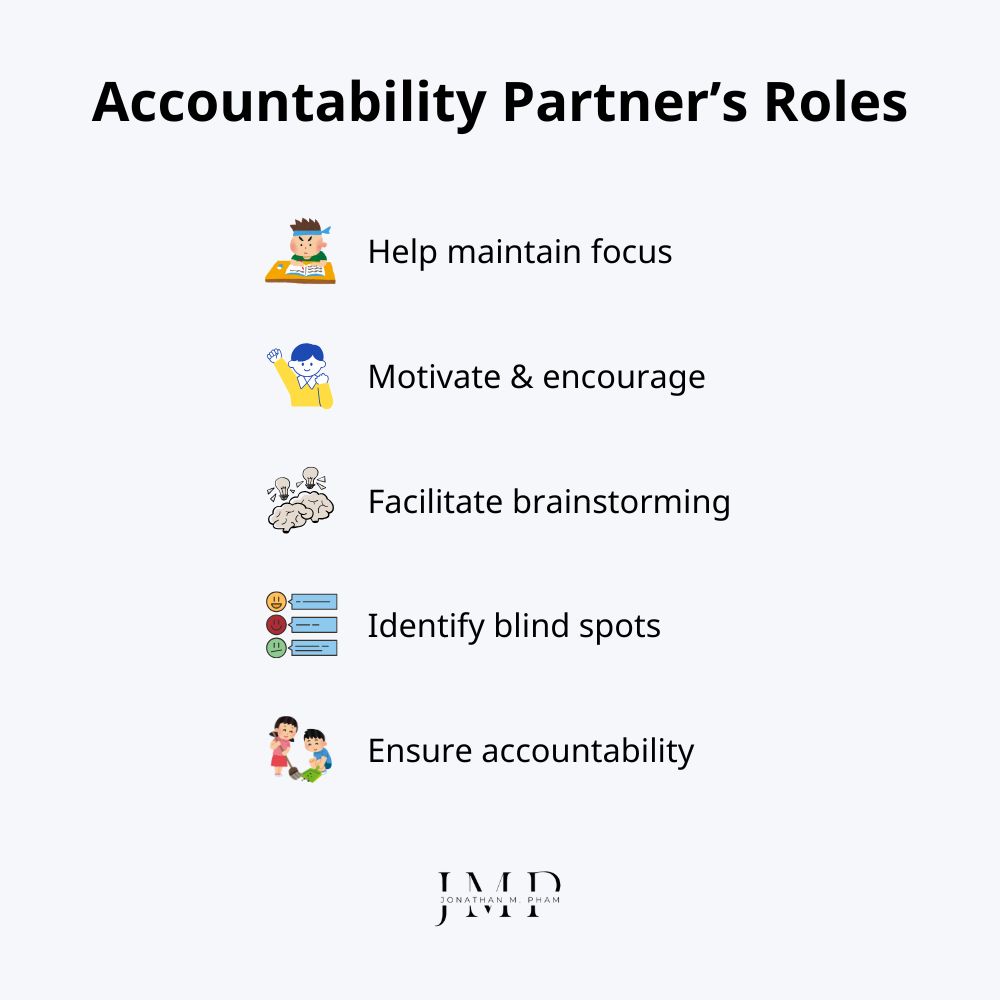
The purpose of having an accountability partner extends beyond mere motivation. They serve as a sounding board for your ideas, offering a fresh perspective that contributes to better decision-making. For example:

Your partner will regularly check in with you about your goals and progress – whether through scheduled calls, messages, or shared documents. They’ll ask specific questions about what you’ve accomplished, what challenges you’ve faced, and what your plans are for the upcoming period. This consistent follow-up enables you to better stay mindful of your commitments and avoid getting sidetracked.
Example: If your goal is to learn a new language and you’ve decided to study for 30 minutes daily, they might text you each evening asking if you completed your study session and what you learned.
When you encounter difficulties or feel your motivation waning, a partner may offer the much-needed psychological support. They are the companion who reminds you of the initial reasons for pursuing the goal, celebrates every small win, and aids you in reframing setbacks as learning opportunities.
As mentioned, your buddy acts as a sounding board for you to talk through your thoughts and challenges. In addition, they typically come up with perspectives you have not considered, which make it simpler to identify potential solutions or innovative approaches to your problems.
A good accountability partner will not be afraid of giving honest and thoughtful comments on your progress and decisions (which is invaluable for personal growth). Their input is crucial for pinpointing potential weaknesses in your approach or bad habits that might be hindering progress.
Ensure accountability
Knowing that you have to report your progress to someone else breeds a sense of responsibility. Your partner will gently hold you accountable for any missed deadlines or unfulfilled commitments, prompting you to reflect on the reasons and encouraging you to get back on track.
Responsibility equals accountability equals ownership.
Pat Summitt
According to the Association for Talent Development (ASTD), those who make a commitment to someone else have a 65% chance of success. This probability jumps to an impressive 95% when they establish a specific accountability appointment.
Probability of goal completion based on commitment level (based on ASTD Study)
| Action | Probability of Completion |
| Having an idea or goal | 10% |
| Consciously deciding to do it | 25% |
| Deciding when you will do it | 40% |
| Planning how to do it | 50% |
| Committing to someone that you will do it | 65% |
| Having a specific accountability appointment with someone you’ve committed to | 95% |
Furthermore, a study by Dr. Gail Matthews at Dominican University found that those who documented their goals were more likely to achieve them. Notably, participants who not only wrote down their goals but also sent weekly progress reports to a friend experienced significantly greater success.
From a psychological standpoint, an accountability partnership creates a social dynamic where progress is expected and reinforced. Knowing that another person is aware of your goals and is invested in your success typically translates to a stronger sense of obligation and drive. Not to mention, embarking on a shared journey fosters a sense of camaraderie, making you more likely to stay committed even when faced with internal resistance.
When you encounter obstacles or setbacks, you can always fall back on your partner for encouragement (given that there is enough mutual trust between you two) – so that you may stay resilient and keep pushing forward. Additionally, regular check-ins provide a consistent source of motivation, reminding you of your “why” and helping you reframe challenges as opportunities.
Explaining your goals to another person forces you to articulate them clearly and concisely. This process of verbalizing your aspirations often solidifies your commitment and awareness of what you truly want to achieve. After that, their questions and feedback can help you refine your objectives, ensuring a well-defined roadmap to follow.
Through discussions with your partner, you gain insights into your own behaviors, patterns, and thought processes. They might observe tendencies you hadn’t recognized, thereby enabling you to understand your inner landscape on a deeper level.
To effectively report your progress, you’ll likely need a plan. Your buddy’s role is to encourage you to break down all goals into smaller, manageable tasks and come up with a realistic timeline. This collaborative approach to planning is crucial for figuring out potential hurdles and developing strategies to overcome them.
The regular check-ins and the desire to demonstrate progress to a trusted companion is a powerful catalyst for conquering procrastination and adopting positive behavior. Knowing that you’ll be discussing your actions will motivate you to stick to your routines, whether it’s exercising regularly, working on a creative project, or studying consistently.
An accountability partnership isn’t just about overcoming challenges; it’s also about acknowledging and celebrating milestones. Sharing your achievements with someone who knows your journey typically results in a significant boost in morale and reinforces positive behaviors, making the overall experience more rewarding.
Read more: Habits in Personality Development

Deciding whether or not to seek an accountability partner is a personal choice that depends on one’s individual goals, personality, and current circumstances. While the benefits are numerous, it may not be the ideal solution for everyone at all times.
When it might be beneficial:
When it might not be the best fit (or not right now):
Two are better than one, because they have a good return for their labor: If either of them falls down, one can help the other up.
Ecclesiastes 4:9
While friends, family, or colleagues might seem like obvious choices, the ideal partner is someone who possesses specific qualities and whose approach complements your needs and goals.
Here are a few things to consider when making this important decision:
As mentioned, you need to feel comfortable being honest and vulnerable with your buddy, sharing your successes and setbacks without fear of judgment. Mutual respect for each other’s time, goals, and perspectives is also essential.
Example: If you’re working on improving your time management skills, you might reach out to a colleague known for their work ethics and excellent organizational abilities.
Consider whether you prefer someone who is direct and challenges you or someone who is more gentle. The key is to find one that motivates you and encourages open dialogue.
While shared values are essential, sometimes a person with a different perspective or skillset can offer insights and allow you to see things from a new angle. For example, if you’re a detail-oriented person working on a big-picture project, a friend who is more focused on the overall vision might enable you to better prioritize and avoid getting bogged down in minor details.
Sometimes working with a very close friend or family member may blur the lines between accountability and personal relationships. Specifically, they might find it difficult to provide objective feedback or hold you strictly responsible.
A reciprocal accountability partnership, where both individuals support each other in achieving their goals, can be highly effective; it creates a sense of mutual investment and shared responsibility.
Read more: Choices in Life – Moving Beyond Right & Wrong
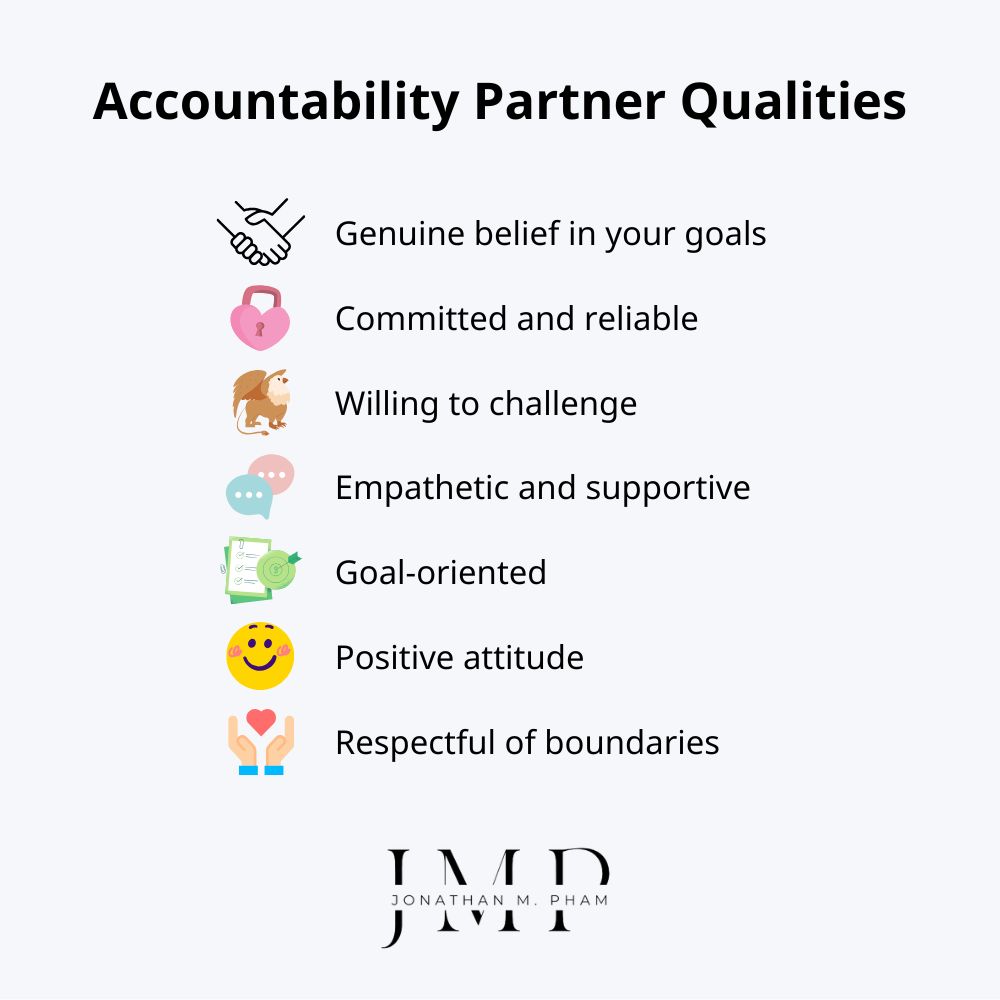
A good accountability partner is someone who truly believes in what you’re trying to achieve and understands why it matters to you. This conviction fuels their support, prompts them to ask insightful questions, and makes their encouragement feel authentic. They don’t necessarily need to share the same goals, but they should appreciate the value of your aspirations and be invested in your success.
Example: If you’re starting a business, a convinced partner might proactively share relevant articles or resources they come across, showing they are thinking about your venture even outside of your scheduled check-ins.
Your buddy should be someone who will take the role seriously and consistently follow through on agreed-upon check-ins and commitments. For instance, if you’re aiming to exercise three times a week, it may be a good idea to collaborate with a friend who is also committed to their fitness goals and consistently shows up for your planned workouts together.
An accountability partner isn’t just a cheerleader; they’re not afraid of challenging you when they see you making excuses, procrastinating, or settling for less than your potential. They are ready to speak the truth, even if it’s difficult to hear, because they are invested in your growth.
Example: They will ask probing questions about why you missed a deadline or didn’t follow through on a plan. If you say you didn’t have time to work on it, they might gently push back by asking how you prioritized your time and suggest strategies for better time management.
During difficult times, a support buddy should provide a safe space for you to discuss your struggles vulnerably and receive reassurance when you feel discouraged. They should actively listen to your concerns, validate your feelings, and offer consolation without judgment. From then, they may work with you to reframe setbacks as learning opportunities and remind you of your strengths and past successes.
Their support goes beyond simply offering encouragement; it involves genuinely acknowledging your challenges and providing the emotional backing you need to keep going.
Read more: Platinum Rule vs Golden Rule – How the Principles of Empathy Have Shifted
While not necessary, a great partner often demonstrates a natural inclination towards goal-setting and organization. This enables them to better understand the process and come up with practical advice.
Example: If you’re struggling with planning your project, an organized partner might suggest using specific project management tools or techniques that have worked for them.
A good partner often brings a positive outlook to your interactions. Their optimism is typically contagious, enabling you to stay motivated and focused even when you come across obstacles or feel discouraged. They can help you see the possibilities and maintain a belief in your ability to achieve your goals, fostering a more encouraging and hopeful environment for your journey.
While they are there to support and challenge you, they should also respect your personal boundaries and limitations. They know that you have other commitments, and they won’t pressure you to do more than what is realistically possible.
Who makes a good accountability partner
Before looking, you should start with a clear understanding of your goals and what kind of support you’re seeking. This will enable you to identify potential partners who align with your needs.
Example: If your goal is to write a book, you might look for someone who is also a writer or has experience with long-term creative projects.
Consider how often you’d like to check in, your preferred method of communication (e.g., calls, emails, shared documents), and the type of feedback you find most helpful – so as to better find someone whose style complements yours.
Think about friends, family, colleagues, or acquaintances who you admire for their discipline, organization, or commitment to their own objectives. Someone you already have a rapport with is typically a good starting point.
Your buddy doesn’t necessarily need to be someone you know well. Sometimes, a connection with someone outside your immediate circle may reward you with a fresh perspective and less emotionally charged feedback.
Numerous online communities, forums, and even apps are dedicated to connecting people with similar goals. Additionally, while this might involve a financial investment, many coaching/ mentoring programs and mastermind groups incorporate accountability partnerships as part of their structure.
Once you’ve identified someone you think may be a good fit, don’t hesitate to reach out and suggest the idea. Explain what you’re looking for and see if they are interested.
Remember that accountability is a two-way street. As such, be ready to support your partner in their goals as well.

Important note: It’s okay if your first attempt at finding a support buddy doesn’t result in a perfect match. Don’t be afraid to try out a partnership for a set period and then reassess if it’s working for both of you. Open communication about what’s working and what’s not is key to a successful collaboration, even in the initial stages.
One potential challenge is that individuals might inadvertently prioritize the appearance of progress over actual learning or effort. The desire to report positive updates to their partner could lead to a focus on superficial achievements rather than deep understanding or meaningful growth. This may manifest as rushing through tasks just to have something to report, inflating progress, or avoiding challenging aspects of the goal that might lead to slower or less impressive results in the short term.
Example: Someone learning a new language might focus on memorizing easy vocabulary for their weekly check-in but avoid practicing conversational skills where they feel less confident.
How to overcome: Emphasize the importance of honesty and a focus on the learning process during check-ins, rather than just showcasing achievements.
Despite the trust established, there’s a possibility of feeling pressured or judged by your partner, especially if you consistently fall short of your goals. This may lead to anxiety, reluctance to be honest, or even resentment towards the relationship.
How to overcome: Cultivate an atmosphere of mutual support, knowing that setbacks are a normal part of the process and focusing on learning from them rather than assigning blame.
If one party consistently puts in more effort or is more committed than the other, it is likely to cause frustration and resentment from the other person; and the relationship is likely to suffer.
How to overcome: Regularly discuss expectations and commitment levels, and be willing to adjust the partnership if one person’s circumstances change.
There’s a risk of becoming too dependent on your buddy for motivation and direction. For instance, you might find yourself only working on your goal right before a check-in because you lack internal motivation otherwise.
While support is valuable, the ultimate drive and responsibility for achieving your goals lie with you.
How to overcome: Remember that the accountability partner is meant to serve as a support system, not the sole driver of success. Focus on developing internal motivation and taking ownership of your journey.
A successful partnership requires effort, clear communication, and a shared commitment to growth. Here are some tips to help you make the most of your relationship:
Before diving in, it is recommended that you engage in an open conversation about your individual goals, the level of support you’re seeking, and how you envision the partnership working. In addition, discuss preferred communication methods, frequency of check-ins, and what you expect from each other. This aligns with what we have discussed above about the importance of mutual agreement.
Consistency is key. You two should agree on a schedule for your check-ins, whether it’s daily, weekly, or bi-weekly, and stick to it as much as possible. Regular communication keeps both parties on track and provides opportunities to address challenges promptly.
Instead of vague statements, you should clearly outline the specific actions you plan to take before the next check-in. This makes it easier for your partner to hold you accountable.
Example: Instead of saying “I’ll work on my project,” commit to “I will complete the first three chapters of my report by our next meeting on Friday.”
Share both your successes and struggles openly. Your buddy will be better equipped to help when they have a clear picture of your progress and the obstacles you’re facing. And when it’s time for them to talk about their progress or challenges, try your best to come up with thoughtful and specific feedback (i.e. offering suggestions and support rather than just general encouragement).
Don’t forget to celebrate milestones and acknowledge the effort both of you are putting in. Recognizing progress, no matter how small, is essential to securing motivation and strengthening the partnership.
Shared documents, task management apps, or other tools may be leveraged to track goals, commitments, and progress – so that both may better stay organized and informed.
Just as you’d expect from your own accountability partner, be sure to consistently show up for scheduled check-ins, respond to messages promptly, and honor any agreements you’ve made. Reliability demonstrates your commitment to their success.
Remember that you are there to support your partner’s aspirations, not to impose your own ideas or goals on them. Hence, keep the focus on what they want to achieve and how you can best help them get there. Try not to constantly relate their challenges back to your own experiences – unless it’s directly relevant and helpful to their situation.
Example: If your partner is trying a new marketing strategy that you don’t personally agree with, it’s better to help them track its effectiveness and analyze the results based on their goals, rather than pushing your own preferred methods.
The role of a support buddy is, essentially, very similar to that of a coach. You need to truly listen to your partner’s goals, challenges, and progress without being swayed by personal opinions. When it’s time to ask questions, try to come up with open-ended ones that encourage them to reflect and think critically about their journey. This way, you give them the opportunity to grow sustainably on their own.
Example #1: Instead of just asking “Did you meet your goal?”, try something like “What were the biggest obstacles you faced this week?” or “What did you learn from that experience?” or “What are your next steps and how can I support you in taking them?”. If they say they struggled with procrastination, you might ask, “What do you think triggered that procrastination?” or “What strategies have you tried in the past to overcome it?”.
Example #2: If your buddy is stuck on a problem, instead of immediately offering a solution, you could ask, “What are some potential solutions you’ve already considered?” or “What resources might be helpful in this situation?”.
Read more: Not Listening – The Silent Killer in Life
While it’s important to hold your partner accountable, remember to also be their cheerleader. Celebrate their successes, no matter how small they might seem. A positive and encouraging environment makes the journey much more enjoyable and sustainable!
When people feel accountable and included, it is more fun.
Alan Mulally

This is just one example; feel free to customize it to fit your specific needs and the nature of your partnership!
Accountability Partner Worksheet – Weekly Check-in
Your Name:
Your Partner’s Name:
Week Ending: (Date)
Your Goal(s) for This Week (Be Specific):
____________________________________________________________________
____________________________________________________________________
____________________________________________________________________
Progress Made This Week:
Challenges Encountered This Week:
What obstacles or difficulties did you face while working towards your goals?
____________________________________________________________________
Lessons Learned This Week:
What did you learn about yourself, your goals, or your approach this week?
____________________________________________________________________
Your Wins This Week (Big or Small – Celebrate Them!):
What are you proud of accomplishing this week?
____________________________________________________________________
Your Focus for Next Week (Be Specific):
____________________________________________________________________
____________________________________________________________________
____________________________________________________________________
Support Needed from Your Accountability Partner Next Week:
What specific help or support would be beneficial from your partner in the coming week? (e.g., specific questions to ask, resources to share, a listening ear for a particular challenge)
____________________________________________________________________
For Your Accountability Partner (To be filled out by your partner):
What I Observed About Your Progress This Week:
____________________________________________________________________
____________________________________________________________________
Feedback and Suggestions for Your Partner:
What specific feedback or suggestions do you have for your partner to help them in the coming week? (Focus on constructive and encouraging advice)
____________________________________________________________________
How I Can Best Support You Next Week:
(Partner fills this out for you based on your “Support Needed” section)
____________________________________________________________________
Additional Notes/Discussion Points:
Any other thoughts or topics you’d like to discuss during your check-in?
____________________________________________________________________
How to use this worksheet:
Variations and customization:
Read more: 32 Self Discovery Activities for Everyone

Check out more quotes about accountability here!
Accountability breeds response-ability.
Stephen Covey
On great teams, players hold players accountable.
Joe Dumars
Accountability is the glue that ties commitment to results.
Bob Proctor
Surround yourself with only people who are going to lift you higher.
Oprah Winfrey
Alone we can do so little; together we can do so much.
Helen Keller
Let us consider how we may spur one another on toward love and good deeds, not giving up meeting together, as some are in the habit of doing, but encouraging one another.
Hebrews 10:24-25
The journey towards visualizing your goals can be significantly enhanced with the support of a reliable accountability partner. By providing that crucial blend of encouragement and constructive challenge, they can help you stay focused, overcome obstacles, and ultimately turn your aspirations into reality.
Whether you’re seeking to boost your productivity, cultivate new skills/ habits, or tackle ambitious projects, consider the power of finding your own dedicated ally – your support buddy – to walk alongside you on the path to success!
Other resources you might be interested in:

A long time ago, in a provincial town far, far away… There was a wealthy, cynical landowner named Fyodor Pavlovitch Kara [...]

Let us visit a fictional place: The Village of the Valley. Once upon a time, those who lived there were divided into two [...]

Has this ever happened to you? Let’s say you are suffering from a frustrating health issue, or stuck in a chaotic life d [...]