




0808
Personal Philosophy: What is Your Truth & Stance for Living?
A long time ago, in a provincial town far, far away… There was a wealthy, cynical landowner named Fyodor Pavlovitch Kara [...]
Leadership is a complicated role that requires sound assessment skills. To better guide their teams, leaders must be aware of what constitutes effective decisions – as well as key guidelines for navigating potential pitfalls. This article provides an overview of the characteristics of decision-making, plus tips and strategies for those in power to enhance their ability to come up with more informed solutions.
Highlights

Decision-making is a process that requires thoughtful consideration of the facts and options available. It’s critical for one in power to identify and eliminate potential biases – as well as to visualize the long-term results, so that whatever action is taken today is in line with the organization’s goals for the future.
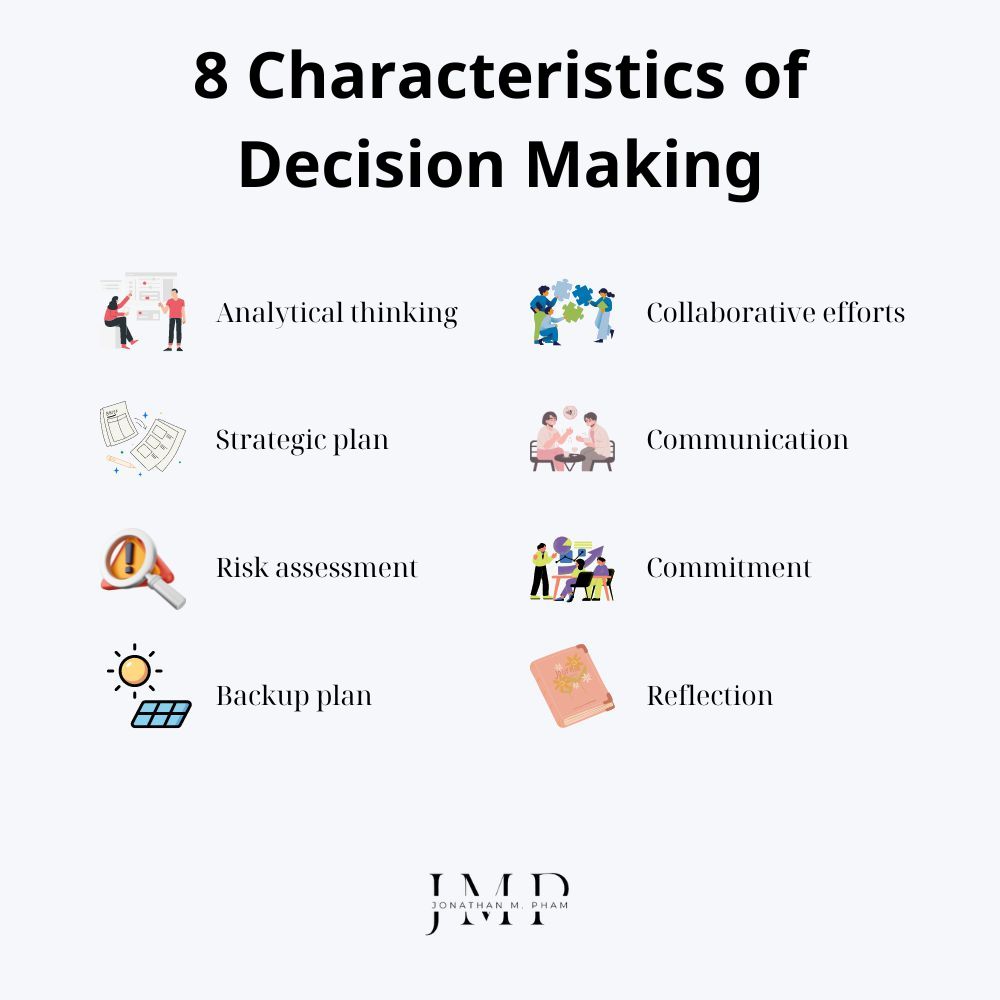
Let’s say, for instance, that you have to decide between two potential projects. One brings in a lot of revenue at an early stage – but could lead to bigger losses down the line. The other requires a huge amount of investment and may not bring in immediate returns, but would be more profitable over time. In this case, analytical thinking is key for making a sound decision.

Corporate decision-making
Once all the data and variables are taken into account, it is time to develop a comprehensive plan with multiple steps that help reach the desired outcomes. This should include identifying short and long-term objectives, setting milestones, and creating an actionable timeline for executing the goals.
An example of implementing this principle would be a leader setting the goal to reduce costs across the organization by 5% over the course of a year. To do this, they’d need to come up with an actionable plan that includes establishing benchmark goals – e.g. reducing travel expenses in the next three months, exploring new suppliers for cost-effective materials, etc. – and evaluating progress along the way to make sure that the target is achievable.

Leaders should also be aware of potential risks associated with any decision they make. For instance, if a certain project has an unfavorable risk/reward ratio, it may be better to look for an alternate approach. As such, always weigh the pros and cons of taking action, and assess the potential hazards before reaching any conclusions.
Now, imagine you’re considering starting a new venture. Ask yourself questions like:
By answering these questions, you’ll be able to make an informed decision that reduces the chances of negative outcomes.
Read more: 200 Self-reflection Questions by Theme

Characteristics of decision making
There is no guarantee that any strategy you implement will turn out to be the right one. Even with thorough analysis, risks exist, and as such, always list down alternative solutions, even if they’re not immediately appealing. Develop a list of potential issues and answers, so that you’ll be ready to pivot when the situation calls for it.
Let’s say your team is tasked with increasing customer engagement over the next quarter. One way would be to introduce new products and services; however, if that does not work, then having a backup plan such as creating content campaigns or running promotions could make all the difference.

How decisions are made
At the end of the day, decision-making is a team sport. While it may be tempting to come up with solutions on your own, it would be wise to take into account other people’s opinions and perspectives – as well as to involve colleagues in the process whenever possible. This allows you to benefit from different voices, which can help to create a more effective strategy.
For instance, if you’re considering launching an advertising campaign, ask your team members what they think could be improved – or what channels would work best for the target audience. This way, you’ll have multiple approaches to choose from, and will be able to come up with a plan that covers all possible bases.

An effective leader should always ensure that all stakeholders are kept in the loop. From team members to clients and partners, it’s critical to provide timely updates on progress – as well as to openly discuss any potential issues or challenges.
Regular communication is key for fostering trust between everyone involved, and will make it easier to collaborate and get the job done efficiently.

Characteristics of decision making
Once you’ve outlined the strategy, it is essential to stay committed to its execution. This requires careful attention and focus on every single step of the process, from identifying objectives to monitoring progress and making sure all parties involved are aligned.
It also means staying open-minded and being willing to make changes when necessary – a key ingredient that has the potential to make all the difference between success and failure. For instance, if the initial results of a marketing campaign are not as expected, do not hesitate to change course and try something new.

A general rule of thumb for leaders is to constantly reflect on their decisions and the strategies they’ve implemented. It helps to think back to the original goals and objectives, and to assess whether or not they were met. This will give you a clearer picture of what went well, and where improvements may be made in the future.
Once an initiative has been completed, take some time for reflection. Ask yourself questions like:
This process will enable you to come up with invaluable insights to inform future decisions.
Characteristics of decision making
At the core of successful decision-making is an understanding and recognition of the importance of coaching. Coaching enables leaders to leverage their expertise, while also motivating others to create solutions on their own. It’s a powerful tool that can be used to unlock resources, break down barriers, and ultimately help drive results.
Coaching doesn’t just stop at the individual level; it may also be applied to teams, departments, and even entire organizations. By creating a coaching culture that encourages collaboration, creativity, and exploration, leaders have the opportunity to unlock the true potential of their organization.

Characteristics of decision making
Successful decision-making is about more than just understanding the facts or coming up with clever solutions; it’s about having the courage and conviction to take action, even when it feels daunting. By understanding the characteristics of decision making and following the guidelines above, leaders should be able to improve their ability to make smarter decisions that deliver lasting results.
Other resources you might be interested in:

A long time ago, in a provincial town far, far away… There was a wealthy, cynical landowner named Fyodor Pavlovitch Kara [...]

Let us visit a fictional place: The Village of the Valley. Once upon a time, those who lived there were divided into two [...]

Has this ever happened to you? Let’s say you are suffering from a frustrating health issue, or stuck in a chaotic life d [...]