




0808
Personal Philosophy: What is Your Truth & Stance for Living?
A long time ago, in a provincial town far, far away… There was a wealthy, cynical landowner named Fyodor Pavlovitch Kara [...]
Discover the secrets to achieving joy and happiness in life, plus practical steps to make it a long lasting part of your life journey!
In the hustle and bustle of modern life, we often find ourselves chasing various goals and desires. Yet, amid the chaos, there’s a common thread that connects us all: the pursuit of happiness. It is a profound and universal aspiration, a state of being that we all seek to experience. For centuries, the quest for happiness in life has been a central theme throughout human history. But what does it really mean, and how can we attain lasting joy that transcends fleeting moments of pleasure?
Highlights
Happiness in life is a complex and multifaceted concept that transcends a one-size-fits-all definition. At its core, it can be broadly described as a state of well-being – characterized by the presence of positive emotions like joy, love, and satisfaction. It’s the warm glow of contentment, the exhilaration of achievement, and the peaceful satisfaction that makes life worth living.
What’s truly remarkable is that the experience can manifest itself in a myriad of ways:
Happiness is not a one-size-fits-all emotion. Instead of being a monolithic state, it is a kaleidoscope of feelings that one may experience in various forms – including joy, gratitude, serenity, interest, hope, pride, amusement, inspiration, awe, and love. Each of these emotional experiences contributes to the intricate tapestry of happiness, enriching our lives in unique ways.

Below are a few examples of a person who has attained happiness in life:
Happiness begins with appreciating life’s imperfections and being content with your circumstances. It’s not about perfection or having everything you desire, but rather acknowledging your achievements, goals, and the blessings you have.
Happy people tend to smile more often. Their presence radiates joy that boosts the mood of everyone around them.
While negative feelings may occasionally visit, they don’t linger. Happy people emphasize the positive aspects of their lives; they possess the unique ability to bounce back swiftly from setbacks.
The presence of strong, supportive, and loving relationships is a cornerstone of happiness. These connections are characterized by kindness, compassion, effective communication, respect, trust, and mutual assistance.
It involves being fully present, allowing you to savor life’s simple pleasures, and avoiding the burden of dwelling on the past or worrying about the future.
Happy individuals exhibit a natural curiosity and open-mindedness. They actively seek opportunities to grow and improve themselves. Being interested in new ideas, experiences, and challenges, and relishing the acquisition of new skills and knowledge, is an essential component of a fulfilling life.
A profound sense of purpose and meaning in life provides direction, motivation, and a heightened appreciation of the present. It’s the belief that your actions and endeavors contribute to something larger than yourself, imbuing each moment with significance.
True happiness is often born from an innate ability to appreciate even the most trivial of life’s treasures. It’s about being grateful for what you have, not taking anything for granted, and finding joy in the beauty of nature, the kindness of strangers, the taste of food, or the sound of music.
Taking time to laugh heartily and have fun is an integral part of a joyful life. It’s about embracing moments of mirth and relishing the company of loved ones.
The purpose of our lives is to be happy.
Dalai Lama
Research has consistently shown that happiness is not just a fleeting emotion; it is a powerful force that has the potential to significantly impact our lives in numerous ways.
Studies have revealed that happy individuals often possess stronger immune systems, lower blood pressure, a reduced risk of heart disease, and a greater likelihood of living longer. This may be attributed, in part, to the fact that they tend to prioritize self-care, adopting healthy habits such as maintaining a nutritious diet, regular exercise, and sufficient sleep.
Research also demonstrates that happy people are generally more creative, motivated, focused, and efficient compared to their unhappy counterparts. They also excel in decision-making, problem-solving, and stress management, making them more effective and resilient in both their personal and professional lives.
Happiness has a magnetic effect on our social interactions; it makes us more approachable, generous, cooperative, and compassionate. Being happy allows us to forge deeper and more meaningful relationships, which results in a wider circle of friends, greater social support, and a higher frequency of positive interactions.
The influence of happiness also extends to the professional realm. Happy people are more likely to achieve success in their careers and other areas of life. In addition, their heightened sense of well-being fosters creativity and innovation, allowing them to excel in various endeavors.
As a catalyst for personal growth, happiness has been proven to provide a boost to our self-esteem, nurture optimism, and fortify resilience. As such, in the face of life’s challenges, we are better equipped to remain steadfast and maintain a positive outlook.
The significance of happiness isn’t confined to one single person; rather, it has a ripple effect on the wider community. Happy people are more inclined to give back and volunteer. Their contagious joy and gratitude result in a positive, harmonious atmosphere that inspires others to follow suit.

Studies of happiness in life are deeply rooted in history, with roots tracing back to ancient civilizations. In ancient Greece, there were two distinct concepts:
In addition to the above-mentioned Greek philosophies, ancient traditions like Buddhism and Stoicism also put forth their perspectives on the topic. These belief systems placed a strong focus on the importance of detachment, moderation, and wisdom as essential components for attaining lasting contentment.
However, it was not until the 20th century that happiness research began to take a more systematic and scientific approach. A significant milestone is the Harvard Study of Adult Development – initiated in 1938 and still ongoing – which tracked the lives of 724 men from diverse backgrounds and walks of life. Over the decades, it has unearthed valuable insights into the factors that contribute to one’s well-being, including close relationships, social support, and a sense of purpose.
Among the early pioneers of happiness research is Ed Diener, a psychologist at the University of Illinois at Urbana-Champaign. In the 1980s, Diener introduced the Satisfaction with Life Scale (SWLS) – a simple, yet effective five-item questionnaire designed to gauge one’s satisfaction with their overall lives and specific domains such as health, relationships, and work.
Since then, the topic has experienced a surge in interest and scientific inquiry. Scientists have been making significant strides in uncovering the factors that contribute to happiness – as well as identifying strategies to enhance it. Recently, movements such as positive psychology and humanistic psychology have emerged to explore human potential and strengths as central components of happiness.
Nowadays, international organizations, like the United Nations, have incorporated happiness as a measure of well-being in their indices. The Human Development Index, for example, now includes happiness as a vital element in assessing the quality of life. Additionally, the World Happiness Report, an annual publication, ranks countries based on self-reported life satisfaction. This report employs various indicators, including GDP, social trust, freedom, generosity, and health, to evaluate and compare happiness across the globe.
This type of happiness is closely associated with pleasure and enjoyment, often rooted in the here and now. Hedonic happiness is triggered by experiences that bring immediate gratification, such as spending time with loved ones, savoring delicious food, or engaging in enjoyable activities (e.g. watching a funny movie, going on a vacation, or relishing a relaxing day at the spa). It’s about living in the moment and reveling in the simple pleasures life has to offer.
Eudaimonic happiness takes a more profound and enduring perspective, in that it is intrinsically linked to meaning and purpose in life. It is often experienced when one works towards their goals, contributes to the well-being of others, engages in meaningful projects, makes a positive impact on the world, or aligns their actions with their deeply held values. As such, this type of happiness isn’t just about feeling good; it’s about feeling fulfilled and in sync with one’s authentic self.
Happiness isn’t solely an individual endeavor; it thrives when we spend quality time with loved ones, feel supported by our community, make new friends, and cultivate meaningful relationships. Social happiness underscores the vital role of human connections in improving one’s well-being – that our joy depends on the bonds we share with others and the strength of our social networks.
A more transcendental form of happiness, spiritual happiness is linked to our connection with something greater than ourselves. This connection can manifest through religious beliefs, spiritual practices (e.g. meditation, prayer), witnessing acts of kindness that touch the soul, or simply by experiencing awe and wonder at the world around us.
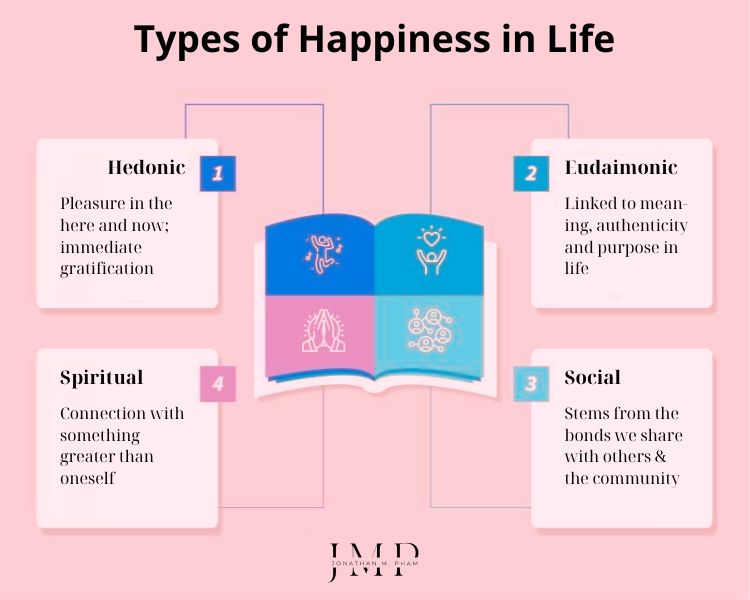
Psychologists have delved into this intricate web of contributors to better understand what makes humans happy. Over the years, such work has revealed several important determinants:
Subjective well-being encapsulates how people evaluate their own lives, both cognitively and emotionally. It consists of three core components: life satisfaction, positive affect, and negative affect. People with high subjective well-being generally report a higher degree of overall satisfaction with their lives, frequently experience positive emotions, and demonstrate a sense of purpose.
Human beings are inherently social creatures; hence, our connections with others contribute significantly to our happiness. People with strong and supportive bonds with family, friends, partners, and colleagues tend to report higher levels of contentment than those who experience loneliness or isolation. These relationships offer love, belonging, acceptance, and support – all of which are essential for one’s emotional well-being.
These are two intrinsic factors related to our personality and emotional responses. Temperament encompasses the genetic component of our personality, which has been revealed to influence our mood, emotions, and outlook. Some people are naturally predisposed to be more optimistic, positive, and content than others.
Adaptation, on the other hand, is the process of adjusting to disruptions in life circumstances, such as changes in income, marriage, divorce, or health. While these events may pose a temporary impact, research shows that over time, we tend to return to our baseline level of happiness.
Read more: Habits in Personality Development – A Comprehensive Guide
The relationship between wealth and happiness is both complex and paradoxical. While money does provide us with basic needs, security, comfort, and opportunities, it is also a potential source of stress, envy, greed, and dissatisfaction.
Various studies have demonstrated that money can increase happiness up to a certain point, but beyond that threshold, the marginal benefits diminish or even reverse. The way we spend our money also matters, as using it for others or investing in experiences tends to bring greater contentment than pursuing material possessions.
The broader societal and cultural context within which we live exerts a significant influence on our values, beliefs, and expectations. A supportive and inclusive society may contribute to fostering social trust, freedom, equality, and generosity, which enhance well-being. Conversely, oppressive or corrupt environments have been shown to be correlated to diminished happiness.

It is worth noting that the definition, measurement, and expression of happiness vary across cultures and countries. In other words, societal norms and cultural values play a significant role in shaping people’s understanding of happiness.
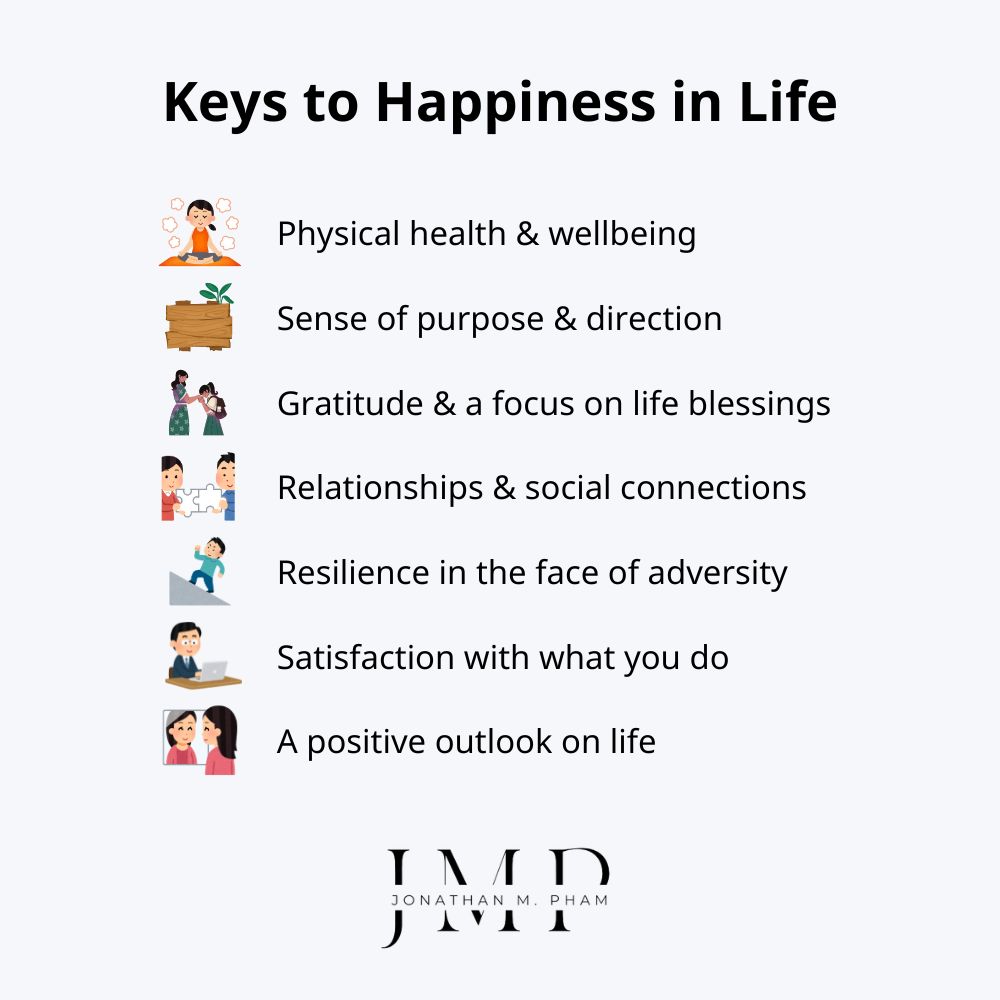
Physical well-being has been proven to be closely linked to happiness in life. When we take care of our bodies through regular exercise, a balanced diet, and sufficient rest, we also boost our own confidence and overall satisfaction. A healthy body provides the foundation upon which one may build a joyful life.
Finding meaning and purpose in life is a fundamental element of happiness. Setting achievable goals, whether they are related to our careers, personal growth, or education, gives us a sense of direction – a reason to strive, grow, and engage with life in a meaningful way.
Gratitude is a powerful reminder of the abundance that surrounds us. By taking the time to acknowledge and appreciate the good things in life, we shift the focus from what we lack to what we have – which is crucial to boosting our mood and promoting contentment.
Our connections with others, whether with family, friends, or loved ones, are among the most profound sources of happiness. They enrich our lives by bringing joy, laughter, and companionship, and reminding us that we are not alone on our journey.
The secret to happiness lies in building a strong inner self, a self that no trial or hardship can diminish.
Daisaku Ikeda
Life is filled with challenges; as such, our response to difficult times is a pivotal factor in our happiness. Resilience, the ability to bounce back from setbacks, plays a crucial role in shaping our well-being. This involves focusing on what we can control, practicing self-compassion, and learning from our experiences.
Mindfulness, self-compassion, and problem-solving skills are all valuable tools in navigating life’s ups and downs.
Read more: Shikata ga nai – The Art of Finding Serenity in Acceptance
A significant portion of our lives is dedicated to work; hence, finding satisfaction in our careers is essential for overall happiness. Identifying our passions and aligning our work with our values is essential to fostering a profound sense of fulfillment. Additionally, achieving work-life balance is also crucial in maintaining happiness and well-being.
Our thoughts play a significant role in shaping our perceptions and life experiences. Simple acts of kindness, daily expressions of gratitude, and taking time for self-care have been proven to elevate one’s mood and contribute to a positive outlook on life. Positivity not only enhances one’s own happiness; it also has a rippling impact on those around them.
The great Western disease is “I’ll be happy when…”. We believe that happiness is a static and finite goal when we get what we want.
Marshall Goldsmith
“Why do I feel no happiness in life? Why can’t I be happy?”
For many of us, we tend to assume happiness in life as a constant state of unending bliss – achievable by amassing material wealth, fame, or unmitigated success. This misconception is not only unrealistic; it is also detrimental to mental health.
Happiness is not a fixed or permanent state; rather, it is a dynamic, ever-changing process influenced by numerous factors, many of which are beyond our control.
Don’t compare your life to others. There’s no comparison between the sun and the moon. They shine when it’s their time.
Buddha
The pervasive influence of media platforms and societal norms has caused many to gauge their lives against the seemingly perfect and curated lives of others. Far too often, we forget that we do not have a complete understanding of the complexities, challenges, and sacrifices that others have faced to achieve their status.
To counteract the damaging effects of constant comparison, one must learn to shift the focus to embrace their unique strengths, talents, and genuine aspects of their life.
Read more: Understanding Yourself – Roadmap to a Deeper, More Authentic YOU
When faced with stress, whether it has to do with work, relationships, finances, or health issues, we often find it difficult to concentrate on the positive aspects of life and experience happiness. Chronic stress makes us occupied with negative thoughts, anxiety, and a diminished capacity to enjoy the present moment.
A pessimistic mindset, characterized by a continuous fixation on the negative aspects of life, is one thing that profoundly hinders happiness. When we are too obsessed with personal problems, challenges, and deficiencies, we forgo the positive elements that make it possible to experience happiness.
Poor sleep, lack of exercise, and inadequate nutrition all pose a negative impact on one’s mood, energy levels, and cognitive functioning. Additionally, suppressing or avoiding emotions can lead to numbness, detachment, and isolation, which hinder authentic experiences. Prioritizing self-care and making a conscious effort to maintain physical, mental, and emotional well-being is essential for a happier life.
Read more: 55 Healthy Habits Questions for A Better Lifestyle
What makes a happy life – TED Talk by Robert Waldinger
Achieving happiness in life is a worthy endeavor that requires a proactive approach, a positive mindset, and a commitment to self-care. Here are some key strategies to help you navigate the path:
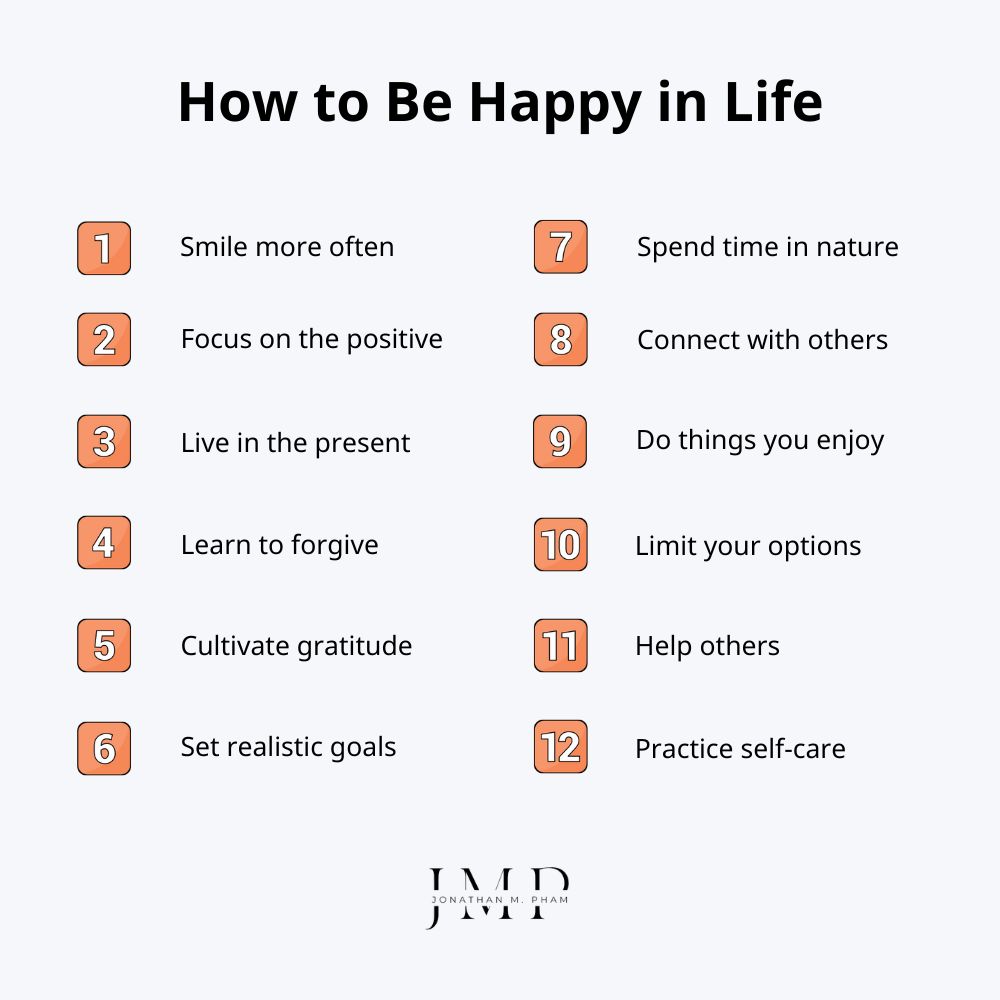
The simple act of smiling has been proven to have a profound impact on one’s happiness. Specifically, it triggers the release of dopamine, a neurotransmitter associated with mood and pleasure. As such, not only does it make you feel happier, but it also brings about a miraculous effect on your health, relationships, and self-esteem.
It’s natural to encounter challenges and negative aspects of life, but making a conscious effort to focus on the good things is crucial to enhancing one’s happiness. Positive thinking, characterized by an optimistic outlook and an expectation of favorable outcomes, is essential to your self-esteem, resilience, and overall well-being.
In order to foster such a mindset, you may consider engaging in activities like meditation, savoring, and goal-setting – so as to become more appreciative and engaged in your life.
Read more: Subconscious Mind Power – Exploring the Hidden Force Within
Yesterday is history, tomorrow is a mystery, but today is a gift. That’s why it is called the PRESENT.
Master Oogway
The present moment is all you truly have; as such, it just makes sense that we should aim to concentrate on it. Let go of living in the past or worrying about the future; instead, focus on what is happening right now.
The present you didn’t make a blunder. That was the PAST YOU.
Marshall Goldsmith
Holding onto grudges and resentment is a heavy burden that makes it extremely challenging for one to find true happiness in life. Instead of getting buried in negative emotions, you should learn to look forward and let go of past mistakes, including your personal past flaws and those committed by people around you.
Practice self-compassion by speaking to yourself in the same caring and understanding manner you would use with a friend. Treat yourself with the same kindness and empathy you would offer to others.
When you align your soul with the hado of appreciation and love, a small drop of happiness will seep into your heart and spread throughout your body. This will link you to the vibration of happiness, and happiness will become a part of your daily life. And this is the secret for finding happiness right now wherever you are.
Masaru Emoto
Gratitude is a powerful positive emotion that involves appreciating and being thankful for what you have. It is a crucial contributor to happiness, health, and relationships – by making you more aware, optimistic, and generous.
Consider keeping a gratitude journal, where you list the things you’re grateful for, and review it during moments of negativity.
A sense of direction and significance is a potent source of happiness in life. As such, I recommend that you do your best to pursue your passions, fulfill your potential, or contribute to a cause greater than yourself.
At the same time, make sure to challenge yourself with goals that are both realistic and achievable. Additionally, remember to celebrate your successes along the way, no matter how trivial they seem.
Read more: Goal Obsession – The Ultimate Flaw that Demolishes Success
Nature has been proven to have a remarkable impact on mental health – in that it helps reduce stress and anxiety, while at the same time enhancing one’s emotions. As a result, regular exposure to nature via outdoor activities (e.g.: jogging, biking, traveling, etc.) is a must for those seeking to attain long-lasting happiness in life.
Loneliness kills. It’s as powerful as smoking or alcoholism.
Robert Waldinger
Strong social connections are essential for happiness. Make time for the people you care about, nurture your relationships, and express appreciation for the support and companionship they provide.
For where your treasure is, there your heart will be also.
Matthew 6:21
Life is too short to spend all your time on activities you don’t enjoy. Therefore, make sure to prioritize and schedule time for activities that bring you true joy and fulfillment. For example, you might decide to wake up 30 minutes early each day to read a book or meditate. Or, blocking off one evening each week to hang out with friends is also not a bad idea.
Two roads diverged in a yellow wood – And sorry I could not travel both.
Robert Frost
When it comes to choosing your life, don’t overwhelm yourself with an abundance of choices. Rather, think about what you’re TRULY passionate about – as well as what you’re good at. Ask yourself:
Once you’ve made a decision, take action. Don’t procrastinate. Start making plans to move forward with your chosen path, and do not succumb to inertia, which is a hindrance to the pursuit of happiness for many of us.
Our default response in life is NOT meaning or happiness. It’s INERTIA.
Marshall Goldsmith
Read more: Ikigai (生き甲斐) – The Blueprint for a Purposeful & Fulfilling Life
If you want happiness for a lifetime, help someone else.
Chinese Proverb
Embracing the community has been proven to be a powerful source of happiness. Engaging with a cause you’re passionate about – and contributing your time to make a positive impact on the world – can significantly increase your own sense of joy. For instance, you may consider volunteering at a local soup kitchen, serving hot meals to people in need.
Physical well-being is closely tied to happiness, as exercise and adequate sleep can reduce stress, enhance mood, and boost your overall physical and mental health. As such, you should prioritize self-care by regularly exercising, eating healthily, and getting enough sleep.
Life is replete with ups and downs; however, by focusing on what truly matters to us and making choices that support our well-being, we can create a happier life for ourselves.
Rather than a one-time achievement, happiness is a way of life. It’s a state that can be pursued and cultivated throughout our lives, even when confronted with obstacles. Embracing happiness as a way of living involves integrating it into our daily experiences and interactions, and nurturing our well-being consistently.
Happiness is not something to possess – but something to BE. It resides in our attitudes, perspectives, and the way we engage with the world.
What you think, you become. What you feel, you attract. What you imagine, you create.
Buddha
True happiness is not found outside of us; it comes from within and is closely tied to the quality of our thoughts, perceptions, and inner experiences. By fostering a positive and optimistic mindset, we are better equipped to create and sustain happiness in life.
Happiness is not a fixed or permanent state; it is a dynamic and ever-changing process that is influenced by numerous factors, both internal and external. Understanding that our perception of happiness is subject to change over time helps us adapt to life’s fluctuations and maintain a positive outlook all the time.
Happiness is a personal experience, unique to each individual. It cannot be measured or compared quantitatively; yet it can (and should) be shared through our emotions, expressions, and connections with others. In doing so, we spread joy and help bring about a positive impact on those around us.
It is through our relationships with others that we develop and grow; learn from one another; help and support one another; and cultivate genuine humanity. Therefore, we cannot enjoy happiness for ourselves alone. True happiness is happiness that is shared with others.
Daisaku Ikeda
Rather than taking things for granted, we should learn to acknowledge all moments of joy, no matter how small they are, so as to foster our sense of gratitude and amplify overall well-being.
In other words, we must actively work towards our well-being, making choices that align with our values, and investing in activities and relationships that bring us joy and satisfaction. Action-driven efforts, such as setting goals, engaging in activities we enjoy, and nurturing relationships, are essential for experiencing lasting joy.
Read more: 200 Self-reflection Questions – Toolkit for Life Pilgrims

Finding happiness in life when you’re struggling with depression is a formidable challenge, but it’s not impossible. Here are a few things you can do to overcome such difficult times:
Social connections are essential for mental health, especially when battling depression. Isolation exacerbates feelings of sadness and hopelessness. Hence, you should make an effort to be with others, particularly those who offer support and understanding. Don’t hesitate to reach out to friends and family when needed.
Seeking assistance from a qualified professional, such as a therapist or life coach, is a crucial step in managing depression. These professionals can equip you with coping skills and strategies to navigate your emotions and condition effectively.
When you are overwhelmed by feelings, it may be beneficial to initiate small, manageable changes in your life. These might include incorporating regular exercise, opting for healthier food choices, or increasing the time spent with loved ones. Such small steps help build momentum and contribute to an improved sense of well-being.
If more of us valued food and cheer and song above hoarded gold, it would be a merrier world.
J. R. R. Tolkien
Happiness doesn’t always have to be tied to grand achievements or significant goals. Even in the midst of depression, you can discover it in life’s small and simple pleasures. Cultivate an attitude of appreciation by savoring the beauty of nature, the kindness of strangers, the taste of food, or the soothing sounds of music.
Read more: 14 Incredible Benefits of Classical Music in Life
Techniques like deep breathing exercises, meditation, yoga, or massage are particularly helpful in terms of reducing stress and promoting a sense of calm. By incorporating these practices into your routine, you can alleviate some of the emotional weight of depression.
Recovery from depression is not an immediate process; it takes time and persistence. Hence, be patient with yourself and refrain from becoming discouraged if you don’t experience immediate improvements. Instead, focus on taking small, consistent steps toward well-being. Celebrate your progress, no matter how modest, and remember that healing is a gradual journey.
Read more: Healing Your Inner Child – 15 Steps to Unearthing the Happy, Healthy You Within
More can be found here.
Happiness is the meaning and purpose of life, the whole aim and the end of human existence.
Aristotle
Happiness is not something ready-made. It comes from your own actions.
Dalai Lama
Happiness is not in the mere possession of money; it lies in the joy of achievement, in the thrill of creative effort.
Franklin D. Roosevelt
It’s a helluva start, being able to recognize what makes you happy.
Lucille Ball
Very little is needed to make a happy life; it is all within yourself, in your way of thinking.
Marcus Aurelius Antoninus
The foolish man seeks happiness in the distance, the wise grows it under his feet.
James Oppenheim
Happiness is nothing more than good health and a bad memory.
Albert Schweitzer
Enjoy the little things in life, for one day you may look back and realize they were the big things.
Robert Breault
Optimism is a happiness magnet. If you stay positive, good things and good people will be drawn to you.
Mary Lou Retton
Those who have a ‘why’ to live, can bear with almost any ‘how’.
Viktor Frankl
A joyful heart is good medicine, but a crushed spirit dries up the bones.
Proverbs 17:22
Do not worry about tomorrow, for tomorrow will worry about itself.
Matthew 6:34

In his book, Dan Harris shares his personal journey into meditation and mindfulness. He provides a refreshingly down-to-earth perspective on how these practices can have a significant impact on well-being. Through his own experiences, Harris demystifies meditation and offers practical insights into how it can make us “10% happier.”
A New York Times bestseller, this book takes readers on a year-long experiment with the author as she seeks to uncover what truly enhances happiness. Gretchen Rubin’s practical and relatable approach to improving happiness is both inspiring and actionable, making it a favorite among those looking for real-life strategies.
This book combines the wisdom of the Dalai Lama with the insights of a Western psychiatrist. It explores the concept of happiness from a spiritual and psychological perspective, offering a harmonious blend of Eastern and Western approaches to well-being.
Daniel Gilbert delves into the psychology of happiness, shedding light on why people often struggle to predict what will make them happy. Through engaging storytelling and research-based insights, he offers a captivating exploration of human happiness.
This book introduces the principles of Acceptance and Commitment Therapy (ACT) – how they can help people lead more fulfilling lives. It emphasizes embracing one’s values and taking mindful actions to overcome struggles and find happiness.
Shawn Achor challenges the conventional belief that success leads to happiness and turns the equation around. He explores how happiness can enhance one’s performance. Through scientific research and practical advice, Achor provides strategies for achieving greater happiness and success.
Martin Seligman, a leading figure in positive psychology, presents a comprehensive guide to cultivating authentic happiness. He focuses on the development of strengths and virtues, offering insights into how individuals can lead more fulfilling lives.
Viktor Frankl’s classic work explores the human capacity for finding meaning and happiness, even in the most challenging circumstances. Drawing from his experiences in a concentration camp, Frankl’s book is a profound exploration of resilience, purpose, and the pursuit of joy.
“The Courage to Be Disliked” is a transformative book that explores the concept of happiness through the lens of Adlerian psychology. It challenges the notion that our past experiences define our future and emphasizes the power of personal choice and responsibility in shaping our lives. By encouraging readers to embrace their individuality and let go of seeking external validation, the book offers a practical guide to achieving lasting happiness and fulfillment.
In “The Earned Life”, Dr. Goldsmith offers a unique perspective on happiness, emphasizing the importance of intentional living and the pursuit of meaningful goals. He challenges the idea that happiness is solely determined by external circumstances, instead focusing on personal growth and fulfillment. By exploring the concept of “earning” happiness through conscious choices and actions, the author provides readers with practical strategies to cultivate a more fulfilling and purposeful life.
What constitutes the ultimate happiness in life? It’s a question that elicits varied responses, shaped by individual values, beliefs, and experiences. Below is a list of some widely acknowledged wellsprings of happiness include:
Read more: 60 Existential Questions to Ask Yourself & Others – A Daily Toolkit to Explore Life’s Depths
Happiness in life is not a destination; it is a way of living. It thrives in the simple pleasures of the present, in the bonds we share with others, and in the understanding that even amidst the most profound trials, the human spirit can still find meaning and joy. As we navigate life’s ups and downs, let us remember to tread the path with gratitude, kindness, resilience, and the unwavering belief that happiness is, indeed, within our reach every day!
Other resources you might be interested in:

A long time ago, in a provincial town far, far away… There was a wealthy, cynical landowner named Fyodor Pavlovitch Kara [...]

Let us visit a fictional place: The Village of the Valley. Once upon a time, those who lived there were divided into two [...]

Has this ever happened to you? Let’s say you are suffering from a frustrating health issue, or stuck in a chaotic life d [...]