




0808
Personal Philosophy: What is Your Truth & Stance for Living?
A long time ago, in a provincial town far, far away… There was a wealthy, cynical landowner named Fyodor Pavlovitch Kara [...]
Discover how building trust is the basis for strong relationships, personal growth, and overall happiness. Dive into practical tips to cultivate trust and create a more fulfilling life!
Trust. A simple word, yet one that carries immense weight in our lives. It’s the foundation upon which healthy relationships are built, the bridge that enables us to be vulnerable and connect on a deeper level. Whether it’s with friends, family, romantic partners, or even ourselves, trust fosters a sense of security, fosters open communication, and empowers us to thrive.
Highlights
Trust involves a complex interplay of emotions, behaviors, and expectations within relationships. While various definitions exist, at its core, the term can be understood as the “sense of security and confidence one feels when in a vulnerable position”.
When we rely on leaders, family members, or friends, we often find ourselves in situations where we must entrust them with our well-being or interests. In these moments of dependency, trust acts as a shield against anxiety and uncertainty.
The presence or absence of trust poses a significant influence on the dynamics of any relationship. When trust thrives, it fosters smooth interactions and mutual understanding. Conversely, once it is compromised, the foundation of the relationship is shaken – and its integrity jeopardized.
The erosion of trust is palpable; it manifests in diminished energy levels, waning commitment, and a reluctance to engage fully. Those who are involved may enter a state akin to an “internal strike,” where empathy and cooperation dwindle in the wake of perceived betrayal or mistreatment. They become reticent to share their feelings or confide in others, and a sense of neglect permeates their interactions as they withdraw from their obligations and responsibilities.
Trust stands as a linchpin of human connection, essential for society to endure. At its core, it serves as the conduit through which people forge bonds, exchange knowledge, and transcend personal boundaries. It is the catalyst that propels us to explore new horizons and unlock hidden potentials that remain elusive in solitude.
In moments of adversity, the assurance that someone has our back imbues us with the resilience to conquer even the most formidable challenges. It provides a source of strength that allows us to bounce back from setbacks and keep pushing forward.
With trust as our anchor, obstacles become manageable hurdles rather than insurmountable walls. We know we’re not alone – and that even if we stumble, someone will be here to help us get back up. Hence, we are empowered to confront everything with newfound courage and fortitude.
In an era marked by bustling lifestyles, many of us often end up detached from others. We crave meaningful connections in which we feel a sense of belonging, and are able to share our feelings/ experiences authentically. Trust creates a space for emotional support and companionship, offering solace during lonely times.
Trust provides a safe haven where we can be ourselves without fear. Within this sanctuary, we are free to shed all “masks” – personas we project to fit in or avoid disapproval – and embrace our true nature, knowing that we will be accepted despite our flaws and imperfections.
When we trust, we don’t have to worry about being constantly judged or criticized. This freedom empowers us to be more open and express ourselves authentically – which is crucial for fostering deeper connections and a stronger sense of self.
By its nature, trust encourages us to believe in the good intentions of others. This shift from skepticism to optimism paints the world in a brighter light. We become more open to the possibility of positive interactions and outcomes – as well as less likely to dwell on negativity.
As time goes by, trust in others may extend to a broader faith in humanity as a whole. Even if people make mistakes, we are prompted to believe they are inherently good – and that everyone is capable of learning from their wrongdoings and growing as individuals. In other words, trust allows room for forgiveness and redemption, laying the ground for a better future.
Read more: Law of Attraction – Tips for Manifesting Abundance and Success in Life

Whether in personal, professional, or social relationships, trust serves as the cornerstone upon which meaningful connections and fruitful collaborations are built.
Trust is a key ingredient in the development of psychological safety. When we believe someone won’t judge us harshly or share our secrets with bad intentions, we are empowered to relax, be open, and express our true thoughts/ concerns/ mistakes without fear. This translates to better communication, collaboration, and problem-solving. Instead of fearing blame, people are now motivated to discuss what went wrong and how to improve.
Think of the relationship between a parent and a child. The child feels safe expressing their true feelings and vulnerabilities because they believe that their parent’s love is unconditional. This open communication strengthens their bond and allows the child to grow emotionally.
In a trusting environment, people feel supported and encouraged. Challenges are viewed as opportunities for learning and growth, rather than threats to personal reputation. As such, they are more likely to step outside their comfort zone and attempt difficult tasks – as well as feel comfortable asking for help and receiving feedback from others. On the other hand, without trust, fear of blame/ ridicule may cause people to hide mistakes, hoard information, and hesitate to exchange ideas – which hinders everyone’s growth and learning potential.
Within the workplace/ any team setting, trust makes it possible for leaders to have confidence in others’ abilities and judgment. This allows for delegation and empowers individuals to make decisions within their area of expertise. Micromanagement, which is often time-consuming and stifles creativity, becomes unnecessary. At the same time, everyone is likely to share relevant information, which translates to a more complete picture of the situation and more well-rounded solutions.
When trust is present, there’s less need to second-guess decisions. Team members have confidence in the decision-making process and the people involved. This reduces decision fatigue, a main contributing factor to clouded judgment.
As discussed earlier, the sense of psychological safety created by trust makes people feel comfortable expressing themselves openly and honestly, knowing their ideas will be respected, even if they differ from the majority. On the other hand, they are likely to listen actively to each others’ perspectives and viewpoints – thereby fostering collaboration and a cohesive team spirit.
When someone trusts you, they believe in your abilities and value your contributions. This validation strengthens self-belief and motivates you to achieve more. Their trust acts as a form of recognition, boosting confidence in your skills and judgment. Even in the case of mistakes, you are assured that people will be there to offer support and constructive input.
When you trust someone, you’re more likely to see things from their perspective, empathize with their feelings, and experience life’s joys and sorrows together. Knowing you can rely on each other through thick and thin creates a shared history and strengthens the bond.
With trust, you don’t have to constantly monitor your words and actions for fear of misinterpretation or judgment – nor do you have to be constantly on guard for suspecting others’ motives or anticipating betrayal. You know that the people around you have your best interests at heart and will support you. This feeling of safety allows you to relax and focus on being your best self.
According to Dan Buettner – author of ‘The Blue Zones of Happiness’, when social trust falls below 30%, a country’s standard of living will fall into a “stagnant” state and cannot grow further. Lack of trust causes people to grow suspicious of each other, rarely interact, and show little interest in community affairs – hence resulting in a less safe and welcoming environment. As such, fostering trust is crucial to binding humanity together and facilitating collective prosperity.
Read more: Happiness in Life – How to Attain Long Lasting Joy

In today’s business landscape, trust is not merely a nicety – but a fundamental necessity. It serves as the catalyst that ignites enthusiasm, instills a sense of belonging, and encourages mutual reliance among team members.
When trust permeates an organization, individuals are inspired to contribute their skills, expertise, and insights wholeheartedly. They feel empowered to invest their talents and energies in pursuit of common goals, which then gives rise to a culture of accountability and integrity.
Conversely, in environments where trust is scarce, team members may withhold their potential due to doubts about the organization’s integrity or their colleagues’ intentions. This reticence diminishes their engagement and stifles innovation, as they operate within the confines of self-preservation rather than collective progress.
In workplaces characterized by low levels of trust, a pervasive atmosphere of suspicion and apprehension prevails, eroding morale and impeding productivity. Employees may find themselves constantly looking over their shoulders, wary of hidden agendas or ulterior motives; as such, they are detracted from focusing on meaningful work.
Worse, a lack of trust between colleagues breeds a toxic culture of office politics, where alliances are forged out of self-interest rather than genuine collaboration. This not only undermines teamwork and cohesion – but also incurs significant costs in terms of management oversight and conflict resolution.
Trust is a multifaceted concept that involves various qualities and behaviors. In this article, let us go over the BRAVING framework proposed by renowned education expert Brené Brown – who has identified 6 key factors that contribute to the cultivation and maintenance of trust as follows:
Trust can’t exist without clear and respected boundaries. With these in place, people feel safe expressing their needs and limitations knowing the other person will listen and respect them. As emphasized by Brown, setting boundaries isn’t selfish, but rather a loving act that lays the ground for healthy, supportive relationships.
Assessment questions:
Trust is built on the expectation that people will follow through on their word. When someone consistently keeps their promises and fulfills their commitments, they demonstrate respect for others’ time and well-being – leading to stronger and more secure connections.
Reliability goes beyond simply keeping promises; it requires being realistic about one’s own capabilities as well. Otherwise, constantly overpromising and underdelivering will give rise to frustration and disappointment.
Assessment questions:
Trust isn’t built overnight; it requires consistent demonstration of reliability over time. People need to see that they can depend on you – not just occasionally, but habitually.
By owning up to our mistakes, offering sincere apologies, and making amends when necessary, we demonstrate honesty, self-awareness, and respect for the other person – thereby fostering a sense of security within the relationship. At the same time, being able to self-reflect and work toward improvement contributes to building faith in yourself – a necessary foundation for trusting others.
Assessment questions:
Read more: Refusing to Apologize – How to Abandon This Insidious Habit
Vault emphasizes the importance of confidentiality in building trust. It represents a safe space where people can share sensitive information without fear of it being spread around. Knowing your secrets are safe allows for deeper levels of intimacy and vulnerability in relationships.
Assessment questions:
It’s important to note that the Vault and Boundaries components often work together. Setting clear boundaries around what information you are comfortable sharing and what you expect from others regarding confidentiality strengthens the overall sense of trust.
Integrity means aligning one’s actions with their values, even in the face of adversity or temptation. It forms the bedrock of trust, signaling a commitment to doing what is right rather than what is expedient.
When people choose to do the right thing, even if it’s the harder path, they demonstrate a commitment to ethical principles and foster a sense of security in the relationship. Consistent acts of integrity are crucial to garnering others’ belief – knowing that you will make decisions based on strong moral principles.
Assessment questions:
Non-judgment entails offering compassion and support without criticism or condemnation – which opens up space for authentic connections and mutual support. On the other hand, it also means offering empathy, understanding, and support during difficult times. Knowing someone will be there for you when you require them strengthens the bond and encourages you to communicate your struggles transparently.
Assessment questions:
It is worth reminding that non-judgment extends inwards as well. Practicing self-compassion and understanding your own vulnerabilities is a key part of building trust with yourself. This inner sense of acceptance allows you to be more accepting of others, further strengthening trust in relationships.
Read more: Learning to Love Yourself – 16 Handy Tips for Fostering Self-esteem Every Day
Generosity involves extending the benefit of the doubt and assuming positive intentions in interactions. It doesn’t mean blind acceptance; rather, it encourages open communication to minimize the risk of misunderstandings. If someone isn’t sure about your intentions, they feel comfortable asking for clarification, fostering trust and avoiding assumptions.
A generous spirit cultivates goodwill and mutual respect. Believing people come with good faith builds trust, strengthens relationships, and motivates everyone to work together toward solutions.
Assessment questions:
Read more: Self-reflection Questions – Toolkit for Life Pilgrims

Trust acts as the bedrock for any meaningful connection, be it personal or professional. Without it, relationships become fragile and susceptible to crumbling. That said, the erosion of trust is often slow and insidious, as a result of broken promises, a lack of transparency, or consistently letting someone down. We may not realize it’s happening until the damage is already done.
Trust isn’t automatic with a title or position; it is established through consistency, vigilance, empathy, and a willingness to face uncomfortable truths. At the same time, rebuilding trust after a breach poses a significant challenge, as it requires sincere apologies, consistent positive actions, and a commitment to transparency and accountability. The rebuilding process takes time and patience, and there’s no guarantee that complete trust will be restored.
To earn trust, money and power aren’t enough; you have to show some concern for others. You can’t buy trust in the supermarket.
Dalai Lama

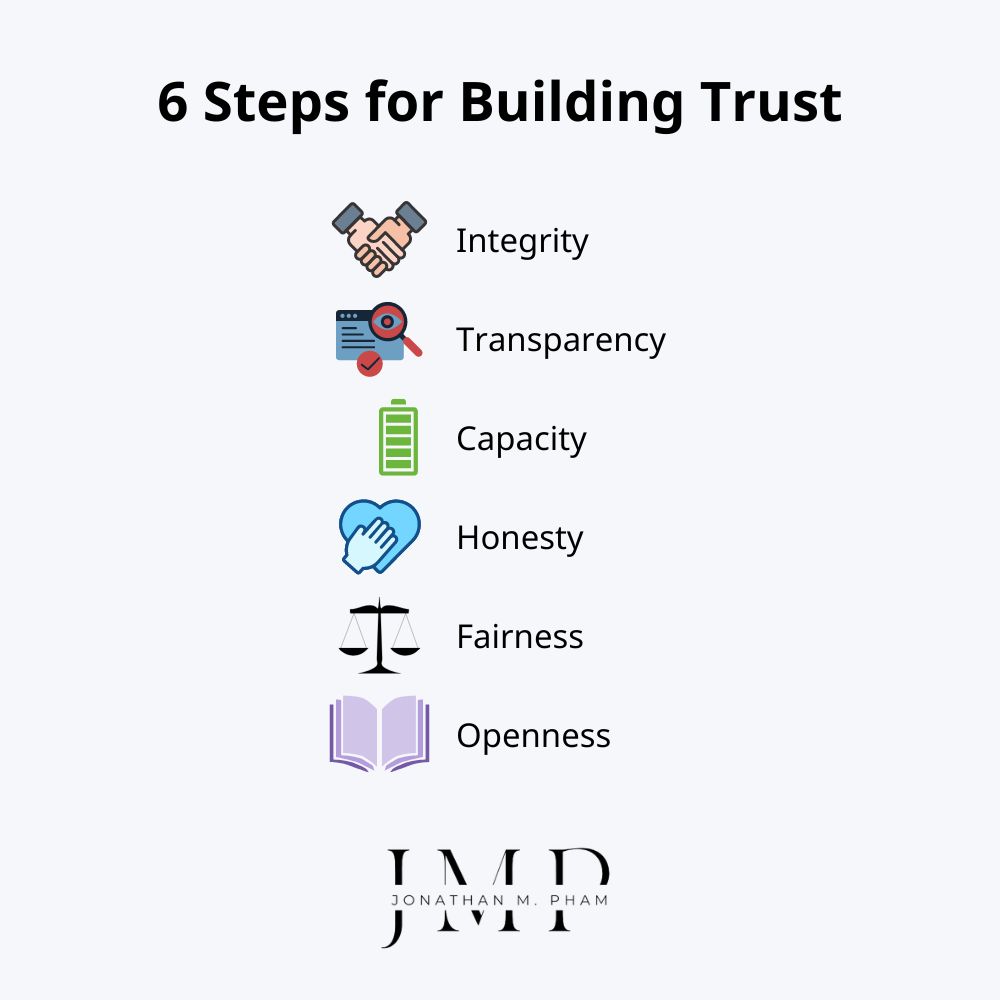
Given the pivotal role of trust – both in the workplace and in personal interactions, it’s imperative that we cultivate and nurture it deliberately – by following these steps:
Integrity is about acting with strong moral principles and doing what one says they will do. Here’s how it plays out:
Read more: Passing the Buck – Why Do We Often Play the Blame Game?
People are inherently afraid of the unknown – and are likely to assume the worst if they aren’t updated on the latest information. Being transparent and willing to share everything – both positive and negative news – makes others feel informed, valued, and included. It demonstrates the acknowledgment that they are important – that their voices are respected.
Capacity, or the perception of competence, is an essential requirement for trust. Even with good intentions, failure to demonstrate it will discourage people from having faith in our ability to deliver what has been promised.
Here’s a detailed breakdown of what it takes to showcase capacity:
Honesty is about aligning words with actions – and being forthright in communication. Failure to showcase authenticity means people are less likely to believe in what one is saying. For example, it’s really challenging to trust someone who claims they value active listening – but does not give you a chance to speak, or a manager who says they care about people’s development – but is willing to fire them at any time.
Being honest is more than just being blunt – one needs to think about how to move forward too. For instance, a manager who plans to deliver negative performance feedback to an employee should do it in a private, constructive way. Aside from being transparent about the areas that need improvement, they should also offer support and resources for development.
Another critical milestone of honesty is to avoid gossip and negativity. Someone who constantly complains about others or spreads rumors will damage trust, as people become unsure of their true intentions and wonder if they’ll be the next target to be attacked.
A crucial element in building trust, fairness involves considering all viewpoints in decision-making, providing equal treatment/ opportunities, and following established rules/ procedures – while still being open to discuss and seek solutions that address everyone’s concerns as much as possible. Being fair means that one must do their best to stay away from:
When you’re open and receptive to feedback, others feel comfortable expressing their opinions and concerns. At the same time, sharing about your struggles allows others to see you in a more authentic light, thereby encouraging intimacy and strengthening the bond of trust.
It’s important to note that openness comes with boundaries. You don’t need to share everything personal; however, being open about your thoughts, feelings, and experiences within those boundaries goes a long way in building trust.
Read more: Personal Development – The Lifelong Quest for a Well-rounded ‘You’
Love all, trust a few, do wrong to none.
William Shakespeare
The best way to find out if you can trust somebody is to trust them.
Ernest Hemingway
To be trusted is a greater compliment than being loved.
George MacDonald
He who does not trust enough, will not be trusted.
Lao Tzu
Trust is the first step to love.
Munshi Premchand
For every good reason there is to lie, there is a better reason to tell the truth.
Bo Bennett
Cultivating trust is a journey, not a destination. There will be bumps along the road, moments where our conviction is tested. That said, by nurturing honesty, accountability, and open communication, we can create a foundation for strong bonds and a life brimming with fulfillment. As you invest in building trust with others, remember to build trust in yourself as well. This self-belief will empower you to make healthy choices, navigate challenges, and ultimately, live a life rich with meaning and connection!
Other resources you might be interested in:

A long time ago, in a provincial town far, far away… There was a wealthy, cynical landowner named Fyodor Pavlovitch Kara [...]

Let us visit a fictional place: The Village of the Valley. Once upon a time, those who lived there were divided into two [...]

Has this ever happened to you? Let’s say you are suffering from a frustrating health issue, or stuck in a chaotic life d [...]