




0808
Personal Philosophy: What is Your Truth & Stance for Living?
A long time ago, in a provincial town far, far away… There was a wealthy, cynical landowner named Fyodor Pavlovitch Kara [...]
Embark on a journey of self-discovery with questions curated to challenge beliefs, nurture spirits, and enlighten your path!
Within this article, you will find a collection of spiritual questions crafted to ignite your inner flame, stir the depths of your spirit, and guide you toward profound insights and revelations.
Highlights
In this section, the focus is on introspective inquiries aimed at deepening one’s understanding of their own spiritual journey and beliefs.
What are the fundamental principles that are most important to you? Consider honesty, compassion, forgiveness, service, creativity, etc. How do these values influence your choices at work, in relationships, and with yourself?
What does “spirituality” mean to you? Does it involve religion, a connection to nature, a sense of purpose, or something else entirely? How is your definition unique to your experiences and beliefs?
Think of moments of joy, hardship, transformation, or awe that have impacted your spiritual journey. How did these experiences shape your understanding of yourself and the world around you?
Are your actions consistent with your core values and spiritual beliefs? Consider areas where your behavior might not align. What steps can you take to bridge the gap and live more authentically?
What practices or activities bring you a sense of calmness and tranquility? How do you connect with something larger than yourself, be it nature, a higher power, or a sense of purpose? Explore different methods like meditation, spending time in nature, or engaging in acts of service.
Read more: Are You Living or Just Existing? Let’s Find Out!
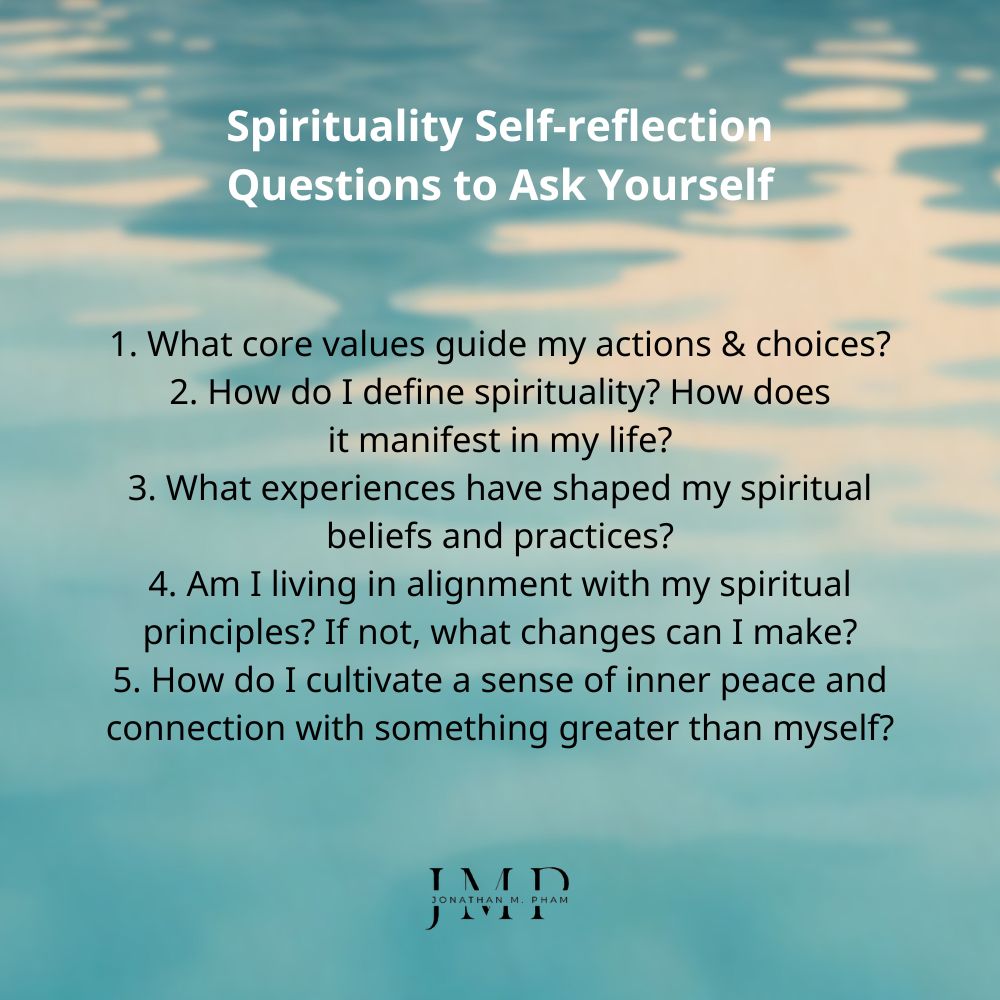
Spiritual questions to ask yourself
Here, we have questions designed to help each of us reflect on our spiritual well-being and identify areas for growth and development.
Do you feel like your life has a significant direction or goal? What activities or contributions give your life a sense of meaning? How can you connect your daily actions to your larger purpose?
When faced with difficulties, do your spiritual beliefs offer comfort and guidance? How do you find strength and resilience in your spiritual practices? What healthy coping mechanisms do you utilize during challenging times?
What steps do you take to nourish your physical, mental, and spiritual well-being? Do you incorporate practices like exercise, healthy eating, relaxation techniques, or spending time in nature into your routine?
Do your relationships reflect your spiritual values? How do you practice empathy, compassion, and understanding in your interactions with others? Are the connections you share supporting your spiritual growth?
What inner resources help you bounce back from setbacks? How do you maintain a positive outlook even in challenging circumstances? Do you find inspiration in spiritual teachings or practices that promote hope and optimism?
Read more: Spiritual Crisis – Finding Light in the “Dark Night of the Soul”
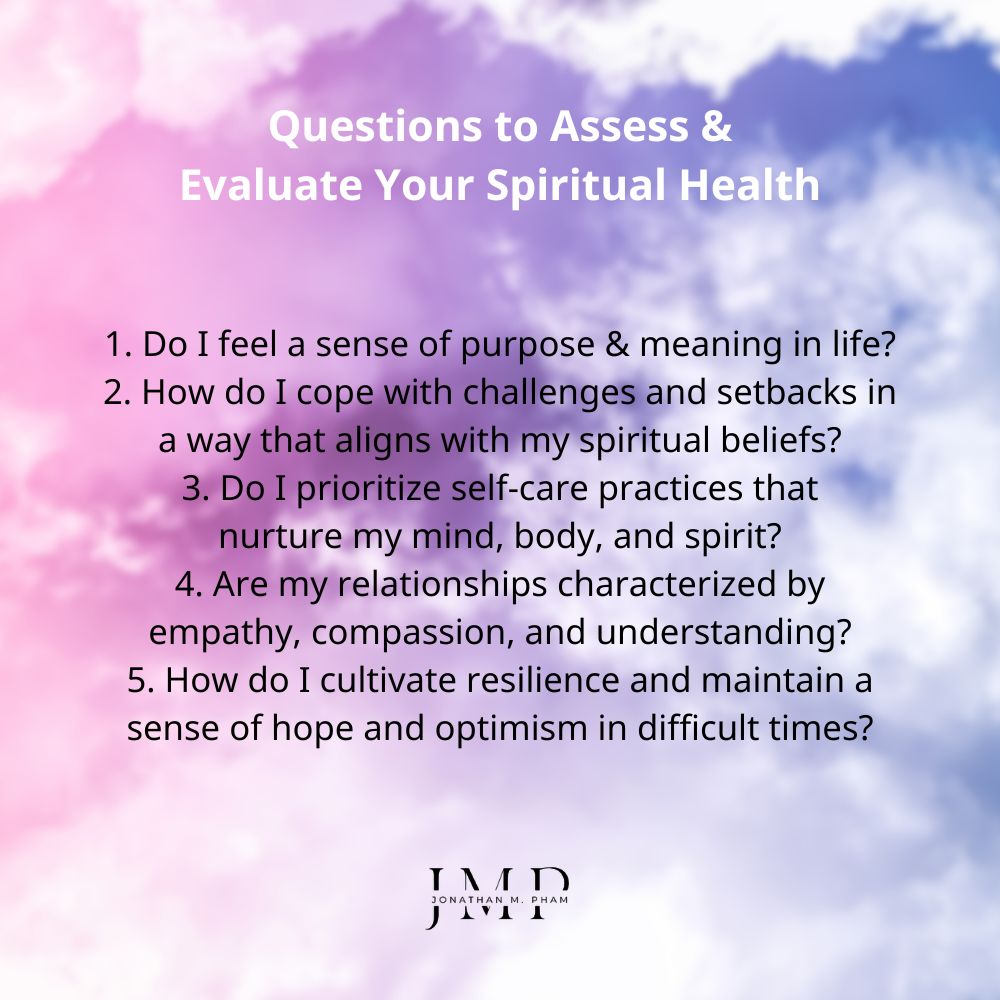
Spiritual assessment questions
This section is dedicated to inquiries that encourage us to explore avenues for expanding and deepening our spiritual journey.
Experiment with different practices like meditation, prayer, spending time in nature, journaling, or volunteering. What activities bring you a sense of peace, connection, and purpose? How can you integrate these practices into your daily routine for consistent growth?
Explore ways to connect with the natural world. This could involve spending time outdoors, appreciating the beauty of nature, or learning about different ecosystems. How does being in nature nourish your spirit?
Step outside your comfort zone and engage with different spiritual traditions, philosophies, or teachings. Read books, attend workshops, or have conversations with people of diverse beliefs. How can these new perspectives broaden your understanding of spirituality?
Practice expressing gratitude for the blessings in your life, big or small. Keep a gratitude journal, reflect on what you appreciate before sleep, or share your thankfulness with others. How does gratitude enhance your spiritual well-being?
Consider what areas of your life you’d like to explore further. This could involve learning new skills, challenging limiting beliefs, or stepping outside your comfort zone. How can you actively engage in experiences that promote personal growth and transformation?
Read more: 32 Self Discovery Activities for Everyone
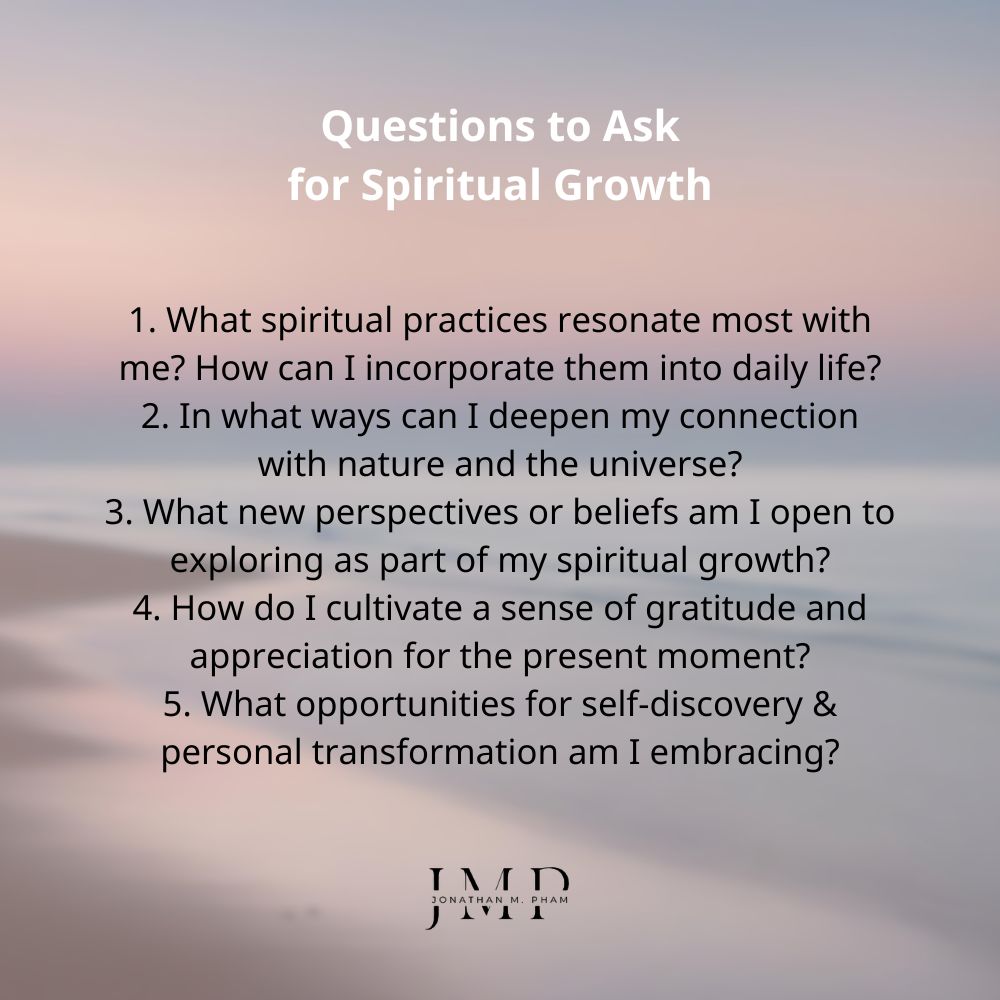
Spiritual reflection questions
If you are an older adult, the following questions should allow you to introduce children to foundational spiritual concepts in a way that is age-appropriate and engaging. At the same time, working with your kids on these queries is also a wonderful way for you yourself to reflect on your own trajectory.
What makes you feel like you’re having a really good day? Is it playing with friends, helping others, or spending time in nature? What makes you feel safe and loved?
Think of a special toy or a fun outing you had. Who gave you that toy or took you out? Why are you thankful for it? Tell me about a time someone did something nice for you, and how it made you feel.
Imagine you see someone feeling sad. What can you do to help them feel better? How can you be kind to your friends, family, and even people you don’t know well? Why do you think sharing and helping others is important?
This is a big question that grown-ups sometimes wonder about too! There are many different beliefs about what happens after we die. What do you think might happen? It’s okay if you don’t have an answer yet, but you can always talk to someone you trust about your thoughts and feelings.
What are some ways you show you love someone? Is it through hugs, saying nice things, or helping them when they need it? How does it make you feel good to show love to others? Can you draw a picture or write a story about someone you love?
Read more: Unconditional Love – Key to Spiritual Transcendence
This section is designed to engage adolescents and teenagers in thought-provoking discussions about spirituality, morality, and personal growth.
Sometimes what you believe in might clash with what others expect of you. How do you stay true to your values even when it feels like everyone else is doing something different? How can you communicate your beliefs respectfully and find common ground with others?
Does your faith or spiritual beliefs influence who you are as a person? How do your spiritual practices shape your decisions and actions? What are some ways you express your spirituality in your daily life?
The world can feel overwhelming at times. How do you find purpose and direction even when things seem chaotic or unpredictable? What are your passions and interests? How can you use your talents to make a positive impact?
Have you ever questioned your beliefs or had an experience that forced you to re-evaluate your spiritual outlook? How did you navigate those challenges? Did your beliefs grow stronger or change in some way?
Holding onto grudges is a burden for many of us. Why is forgiveness important for both yourself and your relationships? How can you practice forgiveness even when it’s difficult? What are some healthy ways to move forward from hurt or betrayal?

Here, we address the unique perspectives and experiences of older individuals, by focusing on reflections that encompass a lifetime of spiritual growth and wisdom.
Reflect on how your spiritual beliefs and practices have changed over time. What experiences have shaped your spiritual journey? What aspects of your faith or spirituality have remained constant?
Life inevitably involves loss, hardship, and grief. How have these experiences impacted your spiritual outlook? What have you learned about yourself and the world through these challenges?
What are you grateful for in your life, both big and small? How do you cultivate a sense of peace and acceptance as you age? What practices or activities bring you joy and contentment?
What life lessons have you learned that you would like to share with younger people? How can they find meaning and purpose in their own lives? What advice would you give them about navigating challenges and staying true to their values?
Social connection is important at all stages of life. How do you stay connected with loved ones, friends, and your community as you age? What are some ways you find support and belonging in your later years?
Read more: Friendship Questions for Deeper Connections

Moving forward, let’s explore inquiries that encourage partners to deepen their spiritual connection and explore shared beliefs, values, and experiences.
How can you encourage and celebrate each other’s individual spiritual journeys? Can you attend workshops or retreats together, or simply create space for each other to practice personal rituals?
Discuss how your spiritual beliefs influence your relationship dynamic. Do you share common practices like prayer or meditation? How can you integrate spirituality into your everyday interactions and decision-making?
Identify core values that are important to both of you, such as compassion, honesty, or forgiveness. How do these shared values guide your actions as a couple and strengthen your bond?
It’s natural to have different spiritual beliefs or practices. How can you approach these differences with respect and understanding? Can you find common ground or create space for each other’s individual needs?
Explore rituals or practices that deepen your connection on a spiritual level. This could involve shared prayer, meditation, spending time in nature together, or volunteering for a cause you both care about.

Spiritual questions to ask your partner
This section is meant to help foster meaningful discussions and reflections within families, by promoting spiritual growth, understanding, and connection among all members.
Discuss what spirituality means to your family as a whole. How can you incorporate practices like shared meals, prayers, or volunteering into your family routine?
Reflect on the traditions and rituals that hold significance for your family. Do these traditions connect you to your heritage or cultural background? How do they strengthen your family bond and create a sense of belonging?
How can your family offer spiritual support to each other during challenging times? This could involve open communication, offering words of encouragement, or practicing rituals that bring comfort and solace.
Discuss moments where your family felt a sense of divine intervention, blessings, or unexpected support. How can reflecting on these experiences deepen your faith and appreciation for life’s blessings?
Model empathy and compassion in your daily interactions with each other. Encourage acts of kindness within the family and towards others in your community. How can you discuss social issues and encourage your children to stand up for what they believe in?
Read more: Platinum Rule vs Golden Rule – How the Principles of Empathy Have Shifted
Below are a few questions specifically curated for group discussions, in which people may share their diverse perspectives and experiences on spiritual matters.
Encourage everyone to share their personal understanding of spirituality and how it has influenced their choices, values, and overall life path. What practices or beliefs have been most meaningful in their journey?
Invite participants to discuss a transformative experience, a moment of deep connection, or a spiritual encounter that has left a lasting impression on their lives. How did this experience shape their perspective on the world and their place within it?
This question prompts us to share personal strategies for navigating challenges and finding moments of peace and solace. What practices, beliefs, or resources may help cope with difficulties and maintain inner calm?
Encourage a discussion on how spirituality can motivate individuals to work toward justice, equality, and social responsibility. How do our values translate into actions that benefit the community and the world?
Explore how spiritual practices and beliefs can foster a sense of connection and belonging within communities. How can individuals create inclusive spaces that promote understanding, compassion, and shared purpose?
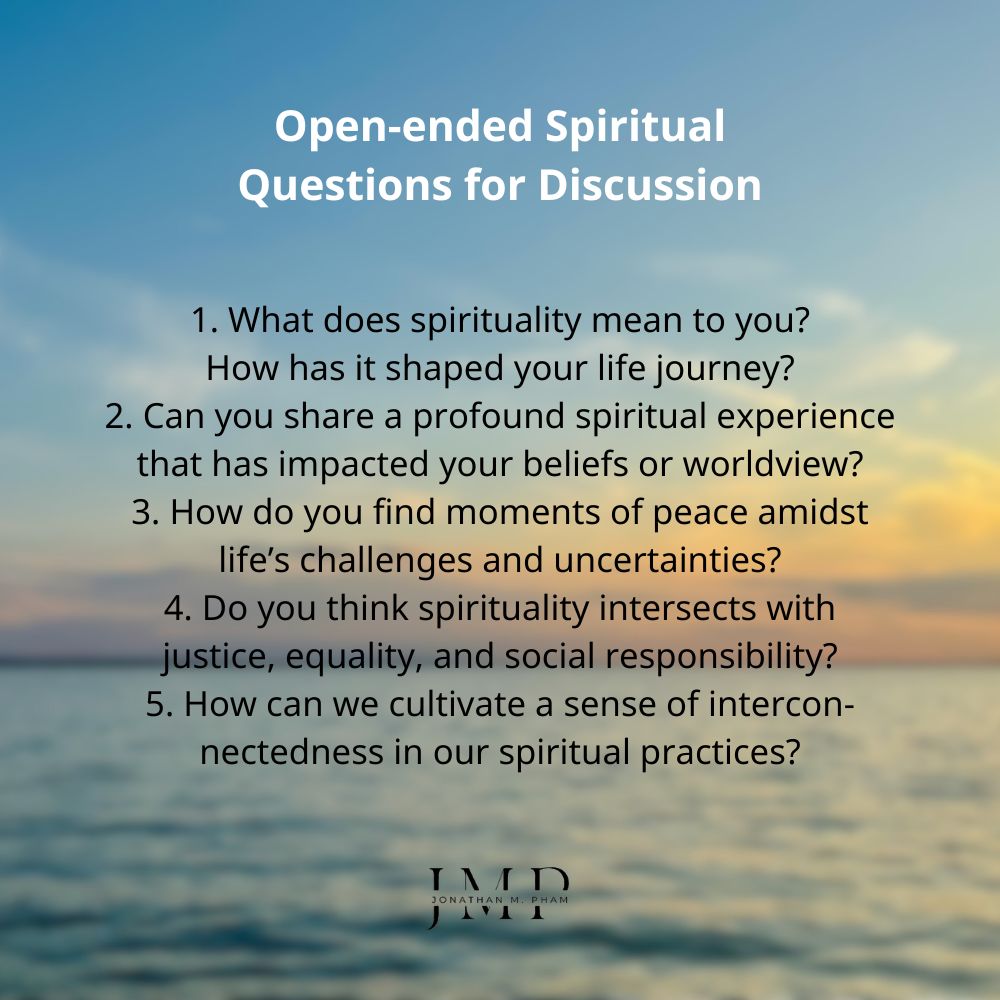
Questions to initiate a spiritual discussion
Lastly, let’s explore questions that one may pose to spiritual leaders or mentors for guidance and insight.
Ask for specific guidance on how to cultivate a more meaningful and consistent spiritual practice. This could involve recommendations for meditation techniques, prayer practices, or incorporating spiritual activities into daily routines.
Explore how the mentor deals with periods of questioning, skepticism, or lack of spiritual motivation. What advice do they offer for overcoming challenges and maintaining faith during difficult times?
Encourage them to share a personal experience or teaching that has significantly impacted their spiritual journey. How can this lesson be applied to the lives of others seeking growth?
Discuss practical ways to integrate spiritual values and practices into everyday decision-making and actions. How can spirituality guide choices related to work, relationships, and overall life purpose?
Seek recommendations for books, websites, courses, or other resources that can provide support and guidance on the spiritual path. This could also involve suggestions for finding a spiritual community or qualified teachers.
Spiritual direction questions
Spiritual questions are those that delve into the deeper meaning and purpose of life, often by exploring our connection to something greater than ourselves. They touch upon our values, beliefs, and sense of belonging in the universe. Some of their key characteristics include:
Such questions are not meant to have easy answers. They can be deeply personal and are subject to evolution as we grow and learn throughout our lives.
Think of religion as a specific path with established landmarks and guideposts. Religious questions enable you to navigate this path and understand its rules more easily. Spirituality, on the other hand, is like exploring a vast landscape. It’s about finding your own way and discovering what truly holds meaning for you.
Below is a more detailed breakdown of the differences between these two approaches:
| Religious questions | Spiritual questions | |
| Focus |
|
|
| Source of answers | Often seek answers from religious texts, scriptures, or teachings of spiritual authorities within a particular faith. |
|
| Nature of inquiry |
|
|
At the same time, it’s worth reminding that these are not strict categories. Many people find that their religious and spiritual lives are intertwined. Religious practices can be a source of spiritual growth; conversely, spiritual exploration often leads to a deeper connection with a particular faith.

Asking spiritual questions offers a multitude of benefits related to personal growth, sense of purpose, and fulfillment in life:
Read more: 45 Mindfulness Questions for Adults – Daily Check-in Prompts for Better Clarity

Below, I have curated a list of deep spiritual topics – along with examples – that will help you spark thought-provoking questions:
Love:
Religious beliefs:
Philosophical:
Suffering and loss:
Gratitude and joy:
Connection and community:
Values, ethics, and morality:
Intuition and discernment:
Spiritual gifts:
Personal growth:
Warfare:

Spiritual problem examples
Here are some tips on how one may approach the process:
Asking:
Answering:
Additional tips:

A good spiritual question often has several key characteristics as follows:
The focus is beyond simple facts – it’s about prompting a deeper exploration of meaning, purpose, and values. As such, people are given the chance to ignite their sense of wonder and desire to understand the bigger picture.
It makes you question your existing beliefs and perspectives, by encouraging you to see things from a new angle. As such, the process is often uncomfortable or even paradoxical, given the fact that those involved are required to grapple with complexities.
A relevant, meaningful question must strongly relate to one’s own life, values, and experiences, so that it may encourage us to draw on our inner wisdom and intuition.
As mentioned, spiritual questions typically do not have a single “correct” answer, but rather invite multiple interpretations and perspectives. The aim here is to spark conversation, debate, and deeper understanding through shared exploration.

The path to enlightenment is not a destination but rather, a continuous journey – one that unfolds with each question asked, each truth revealed, and each moment of awakening experienced. As we conclude our exploration, may the spiritual questions above continue to resonate within our hearts, guiding us toward greater understanding, compassion, and authenticity!
Other resources you might be interested in:

A long time ago, in a provincial town far, far away… There was a wealthy, cynical landowner named Fyodor Pavlovitch Kara [...]
Let us visit a fictional place: The Village of the Valley. Once upon a time, those who lived there were divided into two [...]

Has this ever happened to you? Let’s say you are suffering from a frustrating health issue, or stuck in a chaotic life d [...]